San Jose Travel Guide: Things to Do, Landmarks, Food, and Itineraries

San Jose is the largest city in Silicon Valley and, by population, the largest city in the Bay Area — home to just under a million residents according to the most recent U.S. Census estimates. It sits at the southern end of San Francisco Bay, flanked by the Diablo Range to the east and the Santa Cruz Mountains to the southwest. The city's Mediterranean climate keeps summers dry and warm and winters mild, which means outdoor plans rarely get completely derailed by weather.
Most visitors arrive knowing San Jose as a tech hub, and that reputation is accurate. But the city offers a fuller picture once you start moving through its neighborhoods: a nationally recognized Japantown, one of the country's most concentrated Vietnamese-American communities along the Story Road corridor, a lively downtown with a performing arts scene, and a surprising number of museums and historic sites packed into a relatively walkable core. With roughly 328 mapped attractions, museums, and historic sites in the area, and more than 2,190 mapped restaurants and cafes, there's more here than a short trip will cover.
Neighborhoods and Areas Worth Knowing
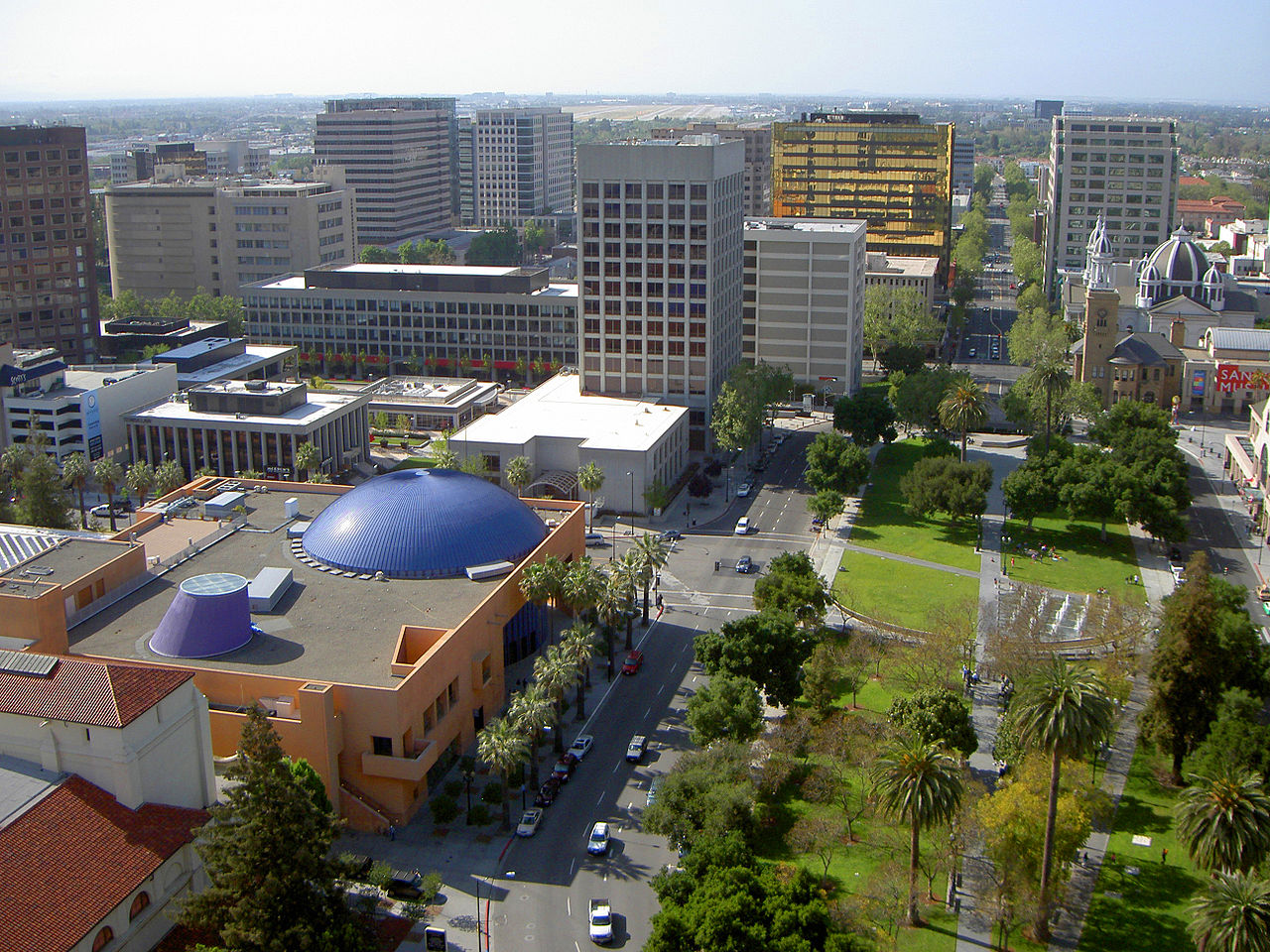
Downtown San Jose is the geographic and civic center of the city. City Hall, the SAP Center arena, San Jose State University, and the main transit hub all converge here. The San Pedro Square Market area, just north of downtown, draws a steady crowd for food and socializing.
Japantown sits about a mile north of downtown and is one of only three remaining Japantowns in the United States. The neighborhood has maintained a genuine community identity, with independent shops, cultural organizations, and restaurants that go back generations. It's compact and easy to walk.
Little Saigon / Story Road on the east side of San Jose is home to one of the largest Vietnamese-American communities in the country. The area is dense with Vietnamese restaurants, bakeries, and specialty shops, and it's a draw for food travelers in particular.
Santana Row and West San Jose offer a different pace — an upscale mixed-use district with outdoor shopping, dining, and hotels that feel closer to a walkable village than a traditional American strip mall. It borders Westfield Valley Fair, one of the major regional malls.
Willow Glen is a residential neighborhood with a small-town main street feel along Lincoln Avenue. It's popular for brunch spots and boutique shopping, and it offers a quieter contrast to downtown's energy.
Almaden Valley and Cambrian to the south are largely residential but give access to open space preserves and trails for those who want to get outdoors.

Things to Do in San Jose
San Jose has a broad mix of indoor and outdoor activities. For a fuller breakdown, see our guide to the Best Things To Do in San Jose.
The Tech Interactive (formerly the Tech Museum of Innovation) in downtown San Jose is one of the city's most commonly visited cultural institutions, with hands-on exhibits oriented around science, technology, and design. It's a good option for families and curious adults alike.
The Winchester Mystery House on the west side is a genuinely unusual landmark — a Victorian mansion with a documented history of continuous construction over several decades that left it with staircases leading to ceilings, doors that open onto walls, and an architectural layout that defies conventional logic. Check the official site for current tour options and hours, as these change seasonally.
The Rosicrucian Egyptian Museum holds one of the largest collections of ancient Egyptian artifacts on public display in the western United States. It's tucked into a residential neighborhood near the Rose Garden and easy to underestimate from the street.
History San Jose at Kelley Park preserves a collection of historic structures relocated from around the city and reassembled into a living history park. It's a low-key but worthwhile stop for anyone interested in the region's pre-Silicon Valley past.
For outdoor time, Alum Rock Park in the Alum Rock neighborhood is one of the oldest municipal parks in California, with trails, canyon views, and creek access. The Municipal Rose Garden near the Rosicrucian museum is a publicly maintained garden that peaks in spring and is free to enter.
Day trips from San Jose open up quickly. Pinnacles National Park, roughly 80 miles south, is one of 12 National Park Service sites accessible from the broader San Jose area. It offers hiking through volcanic rock formations and cave talus passages. Check nps.gov for current conditions and fees before making the trip.
For a curated day-by-day plan, see the San Jose 1-Day Itinerary or the San Jose 3-Day Itinerary. The guide to Top Landmarks in San Jose goes deeper on specific sites.
Where to Eat in San Jose
San Jose's food scene reflects its demographic makeup — diverse, spread across the city, and generally oriented toward value alongside quality. With more than 2,190 mapped restaurants and cafes in the area, the range runs from family-operated Vietnamese pho shops on the east side to upscale farm-to-table restaurants near Santana Row.
Adega, a Portuguese restaurant in San Jose, is one of the more widely documented fine dining establishments in the city. It has received notable recognition nationally and is worth checking out if Portuguese cuisine or a special-occasion meal is on the agenda. As with any restaurant, check the official site for current hours and reservation availability before visiting.
The Story Road and East Santa Clara Street corridors are worth exploring for Vietnamese cuisine specifically — the concentration of long-running restaurants in those areas makes it easy to find a solid bowl of pho or a banh mi without much searching.
Japantown has its own cluster of Japanese restaurants and cafes, some of which have operated in the neighborhood for decades. Santana Row and downtown both offer more upscale options with a wider range of cuisines.
For a more complete overview of dining options, the Where to Eat in San Jose guide covers the city's neighborhoods and cuisine types in more depth.
Getting Around San Jose
San Jose has a public transit network managed by the Valley Transportation Authority (VTA), which operates light rail and bus lines across the city. The VTA light rail connects downtown San Jose to several neighborhoods and outlying areas. Caltrain commuter rail runs between San Jose Diridon Station and San Francisco, making it a practical option for day trips or arrivals from the north. BART now serves the northern part of San Jose through the Berryessa/North San Jose extension, with further extensions planned.
For most routes, contactless tap-to-pay with a credit or debit card is a convenient way to board without needing a separate fare card. Check the VTA website for current fares, route maps, and any service changes before your trip.
Rideshare services operate throughout San Jose and are often the easiest option for reaching neighborhoods not well served by rail. The city's street grid is generally easy to navigate by car, though downtown parking requires some planning during weekday business hours and event nights at SAP Center.
Mineta San Jose International Airport (SJC) sits close to downtown — about three miles north — making it one of the more convenient major airports to arrive at relative to a city's core.
Parking in San Jose
Downtown San Jose has a mix of street parking and parking garages. Street meters are common, and enforcement is consistent on weekday business hours. Event nights at SAP Center noticeably affect availability in surrounding blocks, so arriving early or using a garage farther from the venue is worth considering. Check current parking rates on official city or garage operator sites, as pricing changes periodically.
Japantown, Willow Glen, and Story Road generally have easier street parking than downtown. Santana Row has structured parking, and the availability varies by hour and day.
Visitor Tips
- San Jose is large geographically, so planning around one neighborhood at a time makes the most of a visit rather than crossing town repeatedly.
- The tech industry concentrates significant wealth in parts of the city, which keeps restaurant and accommodation prices higher than many comparable-sized American cities.
- Ordinary urban awareness applies here as it does in any large metro — keep an eye on belongings in busy areas.
- For weather, San Jose's summer months are reliably dry and warm. The Best Time to Visit San Jose guide breaks down the tradeoffs by season.
Family Tips
The Tech Interactive and Winchester Mystery House are both well-suited for families with kids of varying ages. Happy Hollow Park & Zoo in Kelley Park is a smaller zoo aimed specifically at young children. History San Jose occupies the same park and can round out an afternoon there. Alum Rock Park has enough open space and trail variety to keep active kids engaged without requiring serious hiking gear.
Frequently Asked Questions
For answers to common questions about visiting San Jose — from how many days to spend to what the city is best known for — see the San Jose FAQ.