Best Things To Do in San Jose

San Jose is the largest city in Northern California by population—close to a million residents call it home—and it functions as the economic and civic center of Silicon Valley. That combination shapes what it offers visitors: forward-looking museums and innovation spaces sit alongside Spanish colonial missions, Japanese cultural corridors, and miles of urban trail. The city's Mediterranean-adjacent climate keeps most outdoor options accessible year-round, and a walkable core in downtown makes it easy to cover a lot of ground without a car for stretches at a time.
Whether you have a single afternoon or a long weekend, San Jose rewards deliberate exploration. For a suggested sequence, see the San Jose 1-Day Itinerary or the San Jose 3-Day Itinerary. This guide organizes the city's main draws by category so you can build your own mix.
Parks, Trails, and Open Space (Mostly Free)
San Jose's public green spaces are genuinely useful for visitors, not just locals.
Guadalupe River Trail runs through the heart of the city, threading past downtown on a flat, paved path popular with cyclists and walkers. Access points are plentiful, and the trail connects to several parks and the SAP Center arena district. It's one of the easier ways to cover distance between neighborhoods without backtracking.
Alum Rock Park, in the Berryessa foothills northeast of downtown, is one of the older municipal parks in California. It has a network of hiking trails across oak-studded terrain, creek crossings, and access to longer East Bay ridge routes. The elevation change is modest enough for casual hikers but enough to feel genuinely away from the city grid.
Almaden Quicksilver County Park in the southern foothills draws visitors with a more dramatic landscape—former quicksilver (mercury) mine tunnels and infrastructure are visible along several trail routes, giving the hike an unusual industrial-history dimension. Dogs are allowed on many trails, and the views of the Santa Cruz Mountains from upper elevations are wide on clear days.
San Jose Municipal Rose Garden, near the Rose Garden neighborhood, is a formal free attraction that peaks in late spring but remains a pleasant stop through much of the year. The city maintains it as a designated All-America Rose Selections test garden, and the layout rewards slow wandering.
Emma Prusch Farm Park on the east side is a working heritage farm in an urban setting—livestock, heritage orchards, and a community garden that reflects the city's agricultural past. It's an unexpected find for a city most people associate with semiconductors.
Museums and Cultural Institutions
San Jose has a concentrated museum district near the downtown core, with enough variety to occupy multiple days.
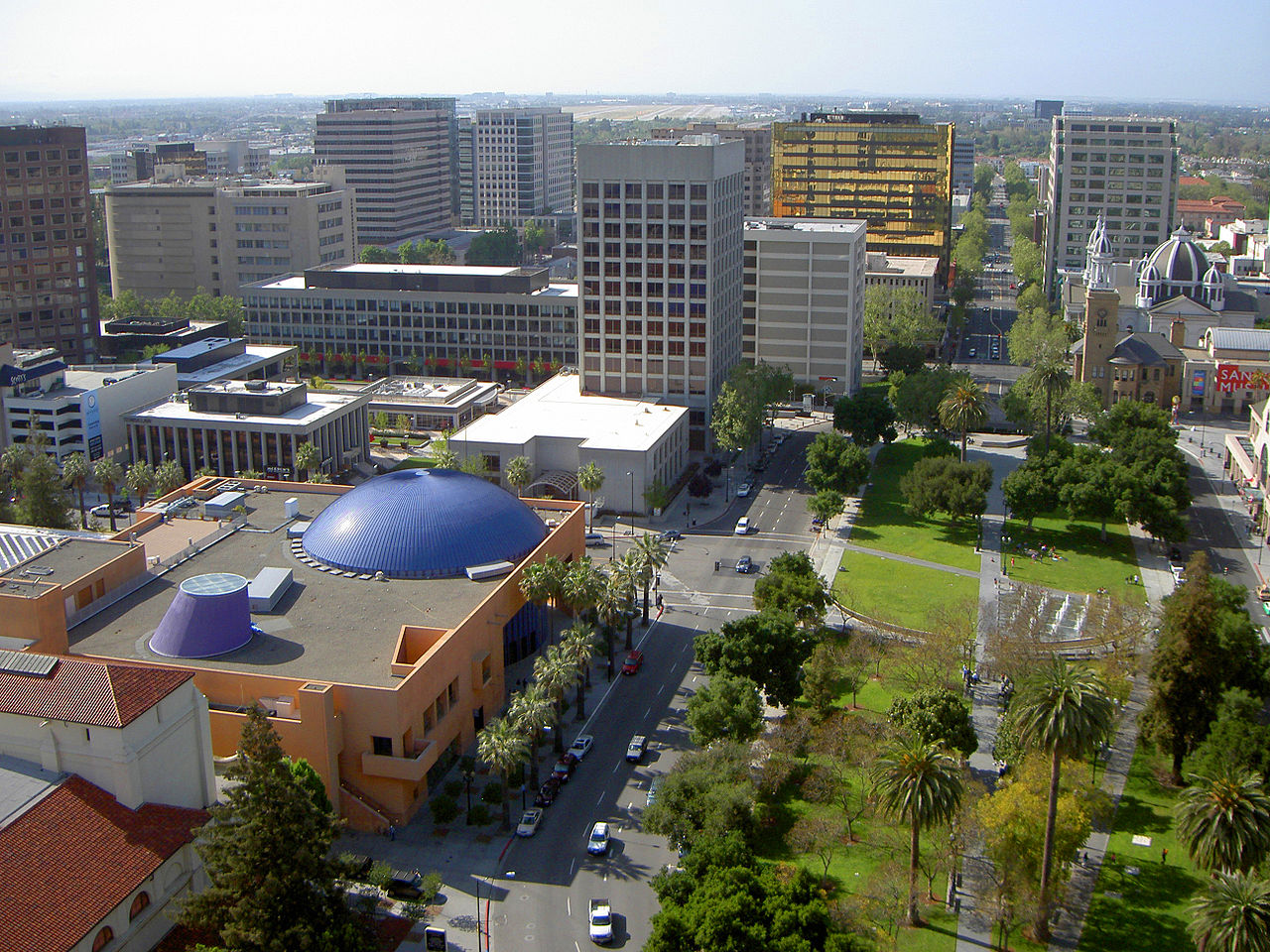
The Tech Interactive is the city's signature science and technology museum, with hands-on exhibits oriented toward innovation, robotics, and design challenges. It works well for adults and families alike—the exhibits are built for active participation rather than passive display. Check the official website for current exhibitions and admission information before visiting.
San Jose Museum of Art anchors the civic plaza on the corner of Market Street and Park Avenue. It focuses on modern and contemporary work, with a permanent collection and rotating special exhibitions. Admission details and free-day schedules are listed on the museum's website.
Rosicrucian Egyptian Museum in the Rose Garden neighborhood holds the largest collection of ancient Egyptian artifacts on public display in the western United States. The grounds include a replica of a rock-cut tomb that visitors can enter. It's a genuinely specific institution—unlike anything else in the Bay Area—and worth the trip across town. Verify current hours and ticketing on their official site.
Children's Discovery Museum of San Jose, near the SAP Center, is purpose-built for younger visitors, with water features, a reconstructed streetscape, and interactive exhibits on community and science. It's a reliable stop for families traveling with kids.
History Park at Kelley Park is an open-air living history museum where relocated and reconstructed Victorian-era San Jose buildings are arranged into a walkable village. A working electric streetcar runs through the park on operating days. It offers useful grounding in what the city looked like before Silicon Valley existed. Check their site for operating schedules.
For a broader overview of San Jose's notable landmarks—including the Winchester Mystery House and the Cathedral Basilica of St. Joseph—see the Top Landmarks in San Jose guide.
Historic Sites
San Jose carries more pre-20th-century history than its tech reputation suggests.
Peralta Adobe–Fallon House Historic Site, managed by History San Jose, preserves the oldest remaining adobe in the city alongside a Victorian-era home, offering a compressed look at two distinct periods of California settlement. It sits within walking distance of the downtown core and opens to guided tours on a schedule posted at the official site.
Mission Santa Clara de Asís on the campus of Santa Clara University is one of the original California missions established in the 18th century. The current church structure is a reconstruction, but the grounds include a rose garden and museum materials relevant to the mission period. The location within an active university gives the site a more casual feel than some other missions in the state.
Japantown San Jose, one of only three remaining Japantowns in the United States, preserves a continuous cultural presence dating to the late 1800s. The Jackson Street corridor has grocers, temples, and community institutions that have operated through various pressures over more than a century. Walking it is both a cultural and a historical experience—and the neighborhood is more navigable on foot than most of San Jose.
Neighborhoods Worth Wandering
Beyond individual attractions, several San Jose neighborhoods repay open-ended exploration.
Downtown San Jose around Plaza de César Chávez concentrates civic landmarks, restaurants, and performance venues within a walkable area. The plaza itself is a gathering point and a useful landmark for orienting yourself. The SoFA (South First Area) arts district, a few blocks south, has independent galleries, venues, and murals.
Santana Row, west of downtown near Valley Fair, is a planned retail and residential district modeled loosely on European pedestrian shopping streets. It draws a local crowd for dining and evening activity, and the architecture is denser and more walkable than most commercial strips in the city.
San Pedro Square Market in the Japantown-Guadalupe neighborhood is a covered food hall with stalls from local vendors. It functions as a gathering point for the surrounding neighborhood and offers a practical option for a varied, casual meal.
Food: What to Know Before You Go
San Jose's dining landscape reflects the city's demographic diversity—Vietnamese, Mexican, Japanese, Indian, Ethiopian, and Peruvian restaurants are well-represented across the city, with particular concentrations in the Eastside neighborhoods and downtown. With roughly 2,190 restaurants and cafes across the area, options run from family-owned spots with decades of history to newer dining concepts in Santana Row and the SoFA corridor. For a more detailed overview, see the Where to Eat in San Jose guide.
Getting Around San Jose
The Valley Transportation Authority (VTA) runs light rail and bus service throughout San Jose and connects to other Bay Area transit systems. Contactless tap-to-pay is accepted; check the VTA website for current fares and route maps. For trips to San Francisco or Oakland, Caltrain departs from Diridon Station downtown and offers a practical alternative to driving. The city also has a growing network of protected bike lanes, and ride-share apps have broad coverage.
Parking exists in downtown garages, though demand rises significantly on event nights at the SAP Center or Earthquakes Stadium. Arriving by Caltrain or VTA light rail on those evenings tends to be simpler.
Planning Your Visit
The Best Time to Visit San Jose guide covers seasonal weather and trade-offs. For answers to common logistics questions, the San Jose FAQ is a practical resource. And for a complete orientation to what the city offers, start with the San Jose Travel Guide: Things to Do, Landmarks, Food, and Itineraries.
San Jose's scale—nearly a million people across a wide geographic footprint—means a single visit will scratch only part of the surface. The payoff is that most neighborhoods have their own character, and the city rewards return visits as much as first-time exploration.