Washington Travel Guide: Things to Do, Landmarks, Food, and Itineraries

Washington, DC occupies a unique position among American cities. It is the seat of federal government, a city of monumental public spaces, and a living neighborhood destination all at once. With a population of roughly 672,000 residents, a median age of about 35, and a dense concentration of museums, historic sites, and parks, Washington rewards both the first-time visitor spending a single afternoon on the National Mall and the traveler who returns repeatedly to explore its distinct neighborhoods. This guide covers the essential orientation: where to spend your time, what to eat, how to get around, and how to plan your days.
Why Visit Washington, DC
Few American cities offer the sheer concentration of publicly accessible cultural institutions that Washington does. Dozens of Smithsonian museums and galleries, monuments stretching across the National Mall, and well over a thousand mapped attractions, historic sites, and points of interest make the city one of the country's most visited destinations. Because many of the federally managed museums and outdoor spaces carry no admission charge, Washington is also one of the more approachable major cities for travelers watching their budget — though it is always worth checking official sites for current entry requirements before you go.
Beyond the monuments, Washington is a city of distinct residential neighborhoods, a serious food scene with close to 4,500 mapped restaurants and cafes, and an arts and nightlife corridor that surprises many visitors expecting only bureaucratic formality.

Neighborhoods Worth Knowing
Capitol Hill surrounds the U.S. Capitol and extends east into a residential grid of rowhouses and local shops. Eastern Market — a functioning public market — anchors the neighborhood's community life on weekends.
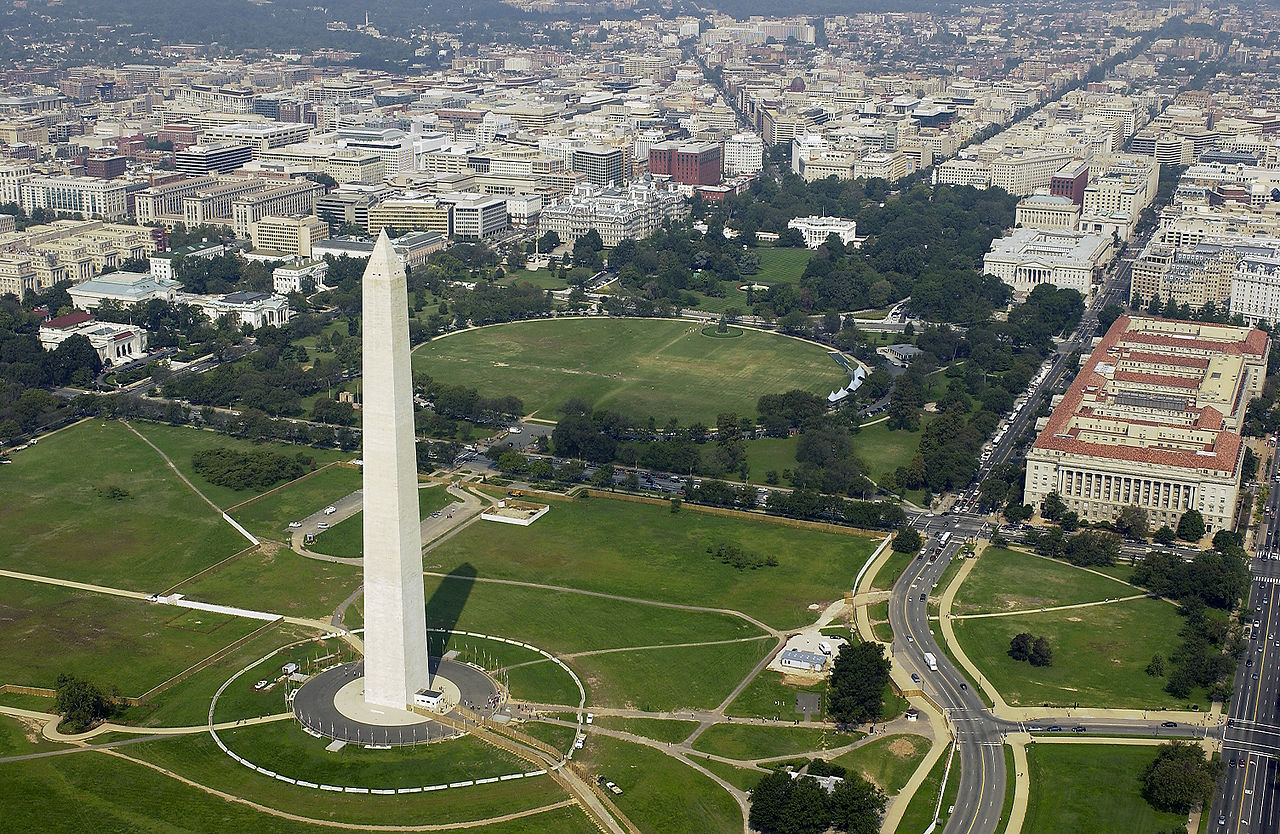
The National Mall and Tidal Basin area is less a neighborhood than a continuous public green, stretching from the Capitol west to the Lincoln Memorial and bordered by the major Smithsonian museums. The Tidal Basin, lined with Japanese cherry trees, draws enormous crowds each spring.
Downtown / Penn Quarter is the commercial and cultural core, home to major theaters, the Chinatown corridor, and dense transit connections.
Georgetown predates Washington's founding as a city and retains a distinct character: brick rowhouses, a waterfront along the Potomac, and a concentration of independent shops and restaurants along M Street and Wisconsin Avenue. Note that Georgetown is not served directly by Metro.
Dupont Circle has long been one of the city's more walkable and socially diverse neighborhoods, with bookstores, galleries, embassies, and a busy restaurant and bar scene radiating out from its central fountain.
Adams Morgan is known for its nightlife and the ethnic diversity of its food offerings, from Ethiopian and Salvadoran restaurants to late-night diners.
U Street Corridor carries deep historical significance as the center of Washington's African American cultural life in the early twentieth century. Ben's Chili Bowl, a long-running Washington institution documented widely in the city's food history, has been a fixture on U Street for decades. Check their official site for current hours before visiting.
Logan Circle, Shaw, and Columbia Heights have grown into some of the city's most active dining and bar districts.
Anacostia and Congress Heights, east of the Anacostia River, are primarily residential neighborhoods that are seeing increased cultural investment, including the continued development of museum and arts infrastructure.
Things to Do
Washington's attractions range across outdoor monuments, world-scale museum collections, and active neighborhood districts. For a curated breakdown, see our full guide to Best Things To Do in Washington.
The National Mall is the obvious starting point — a two-mile open corridor flanked by Smithsonian institutions and anchored at each end by major memorials. Walking it end to end takes more than an hour at a casual pace and doesn't account for time inside any buildings. Plan accordingly.
The Smithsonian Institution operates multiple museums along or near the Mall, covering American history, natural history, air and space, African American history and culture, art, and more. All Smithsonian museums are free to enter, though timed entry passes are required for some; check the official Smithsonian site for current requirements.
Washington also falls within a dense cluster of National Park Service units — 67 in or near the city — including the major memorial sites, Rock Creek Park, and several historic house museums. The NPS website is the authoritative source for access, hours, and any temporary closures.
For a deeper look at the city's monuments, war memorials, and historic architecture, visit our Top Landmarks in Washington page.
Where to Eat
With close to 4,500 restaurants and cafes mapped across the city, Washington's dining scene reflects its international diplomatic community, its large and long-established immigrant populations, and a homegrown chef culture that has drawn national attention. For a neighborhood-by-neighborhood overview, see our full Where to Eat in Washington guide.
A few well-documented names worth knowing:
Old Ebbitt Grill, a few blocks from the White House, has been operating since 1856 and is one of the city's most widely documented historic restaurants. It draws a mix of locals, tourists, and political figures. Check the official site for current hours and reservation options.
Busboys and Poets, open since 2005, operates multiple locations across the DC area and is documented as a hybrid restaurant, bar, and community gathering space with a social-justice orientation. It has become a fixture in the city's cultural life.
Menya Hosaki, documented on Wikipedia, is a well-regarded ramen destination that has drawn attention beyond the local food community.
Chef Geoff's, also documented on Wikipedia, has a long-running presence in the Washington dining landscape.
Ben's Chili Bowl on U Street is arguably the most widely referenced restaurant in the city's cultural history — a half-smoke counter spot that has served the neighborhood since 1958 and appears in accounts of DC history from the civil rights era through the present.
As with any restaurant, hours, menus, and reservation policies change. Confirm details on each restaurant's official site before planning your visit.
Adams Morgan, Columbia Heights, and the H Street Corridor are among the neighborhoods most worth exploring for concentrated dining variety, particularly for international cuisines.
Getting Around
Washington has an extensive public transit system. The Metro rail network covers the city and extends into Maryland and Northern Virginia, with stations serving most major tourist destinations. Buses fill in the gaps, including a network of circulator routes that connect popular neighborhoods. Fares and passes vary; the system supports contactless tap-to-pay for boarding. Check the WMATA website for current fare and service information.
Georgetown, as noted, does not have a Metro stop, so visitors typically reach it by bus, rideshare, or on foot from Foggy Bottom station.
Walking is genuinely viable within many areas — the Mall, Capitol Hill, Dupont Circle, and U Street are all compact enough to explore on foot. Bikeshare stations are distributed across the city for shorter point-to-point trips.
Driving within the city is workable but adds complexity. Traffic congestion is significant during rush hours, street parking is metered and often competitive, and garage rates vary by location. If your itinerary centers on the Mall and major museums, leaving a car at a suburban Metro station and riding in is typically more practical. Always verify current parking rates and policies, as these change.
Planning Your Time
The right amount of time depends on what you want to do. A single focused day is enough to cover the major Mall landmarks and two or three museums. Three to four days allows for a fuller picture: downtown monuments, neighborhood exploration, evening dining, and day trips to nearby historic sites like Mount Vernon or Annapolis.
For structured help, see the Washington 1-Day Itinerary for a tight, efficient day, or the Washington 3-Day Itinerary for a more relaxed pace with neighborhood time built in.
Timing your visit matters. Washington's seasons each have distinct tradeoffs. For guidance on crowds, weather, and seasonal events, see our Best Time to Visit Washington page.
Family Tips
Washington works well for families with children of almost any age. The Smithsonian museums are designed with broad audiences in mind, and the outdoor monuments require no tickets and no reservations. The scale of the Mall is worth considering — it is a lot of walking — so building in rest stops and managing expectations about daily mileage helps. The National Zoo, operated by the Smithsonian, is free to enter (check the official site for timed entry requirements). Paddleboat rentals on the Tidal Basin are a popular break from museum-going, though availability and rates change seasonally.
Visitor Tips
- Many major museums require or strongly recommend timed entry reservations. Book in advance through official museum sites, especially during spring and summer.
- Washington's summers are humid. If you are visiting in July or August, plan outdoor sightseeing for morning hours.
- The city is generally well-lit and active in tourist areas through the evening, but apply the same ordinary urban awareness you would in any major American city.
- Official government buildings — the Capitol, White House, Library of Congress — often require advance ticket requests or tour bookings through congressional offices. Check the relevant official sites well before your trip.
FAQ
Have more questions about visiting Washington, DC? See our Washington FAQ for answers to common questions about entry, transport, accessibility, and logistics.