Top Landmarks in Richmond

Richmond, Virginia carries a long and layered history inside a relatively compact city — home to roughly 228,000 residents and a downtown core where several of the country's most significant historic sites sit within reasonable walking distance of each other. The landmarks below cover the places that first-time visitors consistently seek out, along with some context for why each one matters and how they relate to each other geographically.
For a broader orientation before diving in, the Richmond Travel Guide: Things to Do, Landmarks, Food, and Itineraries lays out the city's main neighborhoods and how the pieces fit together.
Virginia State Capitol
The Virginia State Capitol anchors Capitol Square at the center of downtown Richmond. Thomas Jefferson designed the building in the 1780s, modeling it on the Maison Carrée, an ancient Roman temple in Nîmes, France — which makes it one of the earliest neoclassical public buildings in the United States and one of the oldest working capitol buildings in the country. The General Assembly has met here continuously since 1788, and the building still functions as Virginia's seat of government today.
Inside the rotunda stands a life-size marble statue of George Washington sculpted by Jean-Antoine Houdon — one of the few works of this kind made from a direct life cast of Washington himself. The surrounding Capitol Square includes monuments to a number of historical figures and offers a calm, open space in the middle of downtown. Visitors can enter the building; check Virginia's official state government website for current access hours and tour availability before your visit.
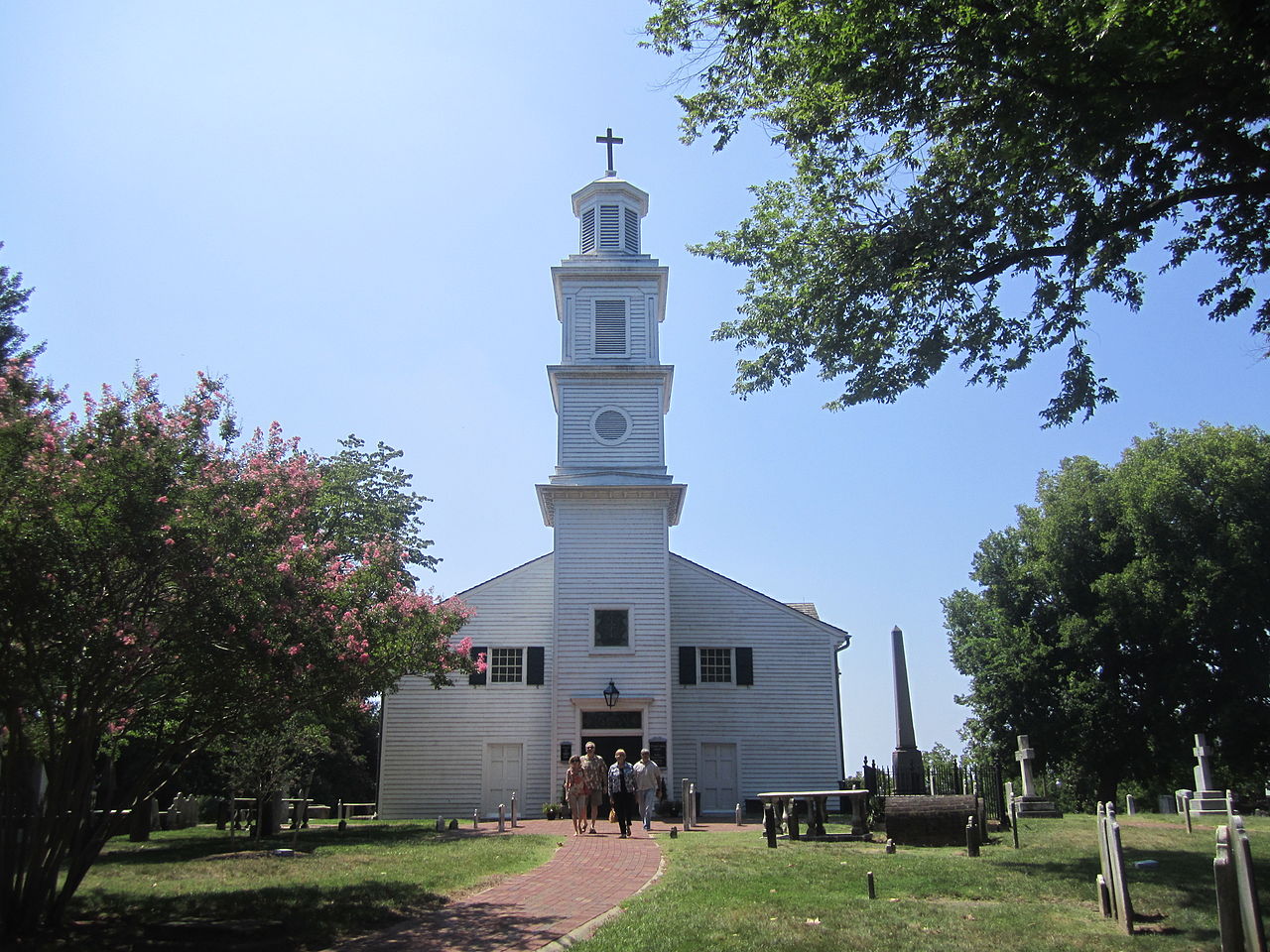
St. John's Church
A short drive or rideshare east of downtown puts you in Church Hill, one of Richmond's older residential neighborhoods. St. John's Episcopal Church is an eighteenth-century building — the current structure dates to around 1772 — and is where Patrick Henry delivered his famous "Give me liberty, or give me death" speech during the Second Virginia Convention in March 1775, a defining moment in the months leading up to the American Revolution. The church still holds regular services and offers tours; confirm current tour schedules on the church's official website before visiting.
The surrounding streets in Church Hill feature some of the city's oldest residential architecture, and the neighborhood is pleasant to explore on foot.
Edgar Allan Poe Museum
Richmond was the city where Edgar Allan Poe spent much of his early life, and the Edgar Allan Poe Museum in Shockoe Bottom holds an extensive collection of Poe manuscripts, letters, personal items, and memorabilia. The museum occupies a complex of historic buildings; the oldest among them is generally dated to the mid-eighteenth century, making it one of the older surviving structures in Richmond. Exhibits trace Poe's time in Richmond and his literary career in depth.
Admission is charged; check the museum's official site for current hours and pricing before you go.
Historic Tredegar and the American Civil War Museum
At the edge of downtown, where the James River meets the old Kanawha Canal, the Tredegar Iron Works complex is one of the more significant industrial sites from the Civil War period. During the war, Tredegar functioned as the Confederacy's main iron foundry, producing artillery and other war materials in large quantities. Today the site is home to the American Civil War Museum, which presents the conflict through multiple perspectives — Union and Confederate soldiers, civilians, and the experiences of enslaved people — a framing that distinguishes it from older, more narrowly focused Civil War institutions.
The Canal Walk runs along the James River here, offering about a mile and a quarter of paved path past historic locks and waterway infrastructure, with bronze medallions embedded in the pavement that mark events from Richmond's past. Brown's Island, just offshore, is a common venue for outdoor events through much of the year. For current admission details and hours at the American Civil War Museum, visit the museum's official site.
Monument Avenue
Monument Avenue is a wide, tree-lined boulevard that cuts through Richmond's Fan District west of downtown. For most of the twentieth century it was known for its large bronze statues of Confederate figures, but in 2020, following sustained public pressure, all of the Confederate monuments were removed. The statue that remains today is a 1996 monument to tennis champion Arthur Ashe, a Richmond native who became the first Black player to win the U.S. Open, Wimbledon, and the Australian Open.
The avenue's early-twentieth-century architecture is well-preserved — rows of townhouses and apartment buildings in a variety of revival styles — and the median parkway makes for a comfortable walk or slow drive. It connects naturally to the neighborhoods of the Fan District and Carytown, both worth time on their own.
Virginia Museum of Fine Arts
The Virginia Museum of Fine Arts, commonly called the VMFA, sits on Boulevard near its intersection with Monument Avenue. The permanent collection spans thousands of years and dozens of cultures, with particularly strong holdings in Art Nouveau and Art Deco decorative arts, ancient art from Egypt, Rome, and Greece, South Asian sculpture, and a notable group of works by Fabergé. The permanent collection is generally free to view; temporary exhibitions typically carry an admission charge. Check the VMFA's official site for current exhibition schedules, hours, and any entry requirements.
The museum's sculpture garden and café make it a reasonable place to spend a half-day, especially when the weather pushes you indoors. Parking is available nearby, and the GRTC Pulse bus rapid transit line along Broad Street provides transit access from downtown.
Maymont
Maymont is a 100-acre Victorian estate in the western part of Richmond, donated to the city in the early twentieth century by industrialist James Dooley and his wife Sallie. The grounds include formal Italian and Japanese gardens, a nature center with native Virginia wildlife on display, a working farm area, and the original Dooley mansion, which is open for tours. The park itself is free to enter; some attractions within the estate charge fees. Confirm current details on Maymont's official site.
Maymont draws local families and visitors alike, particularly on weekends. The grounds are large enough that a walk through the gardens and down to the carriage barn takes a good hour without rushing.
Hollywood Cemetery
Hollywood Cemetery occupies a bluff overlooking the James River in the western section of downtown Richmond. It is the burial site of two U.S. Presidents — James Monroe and John Tyler — as well as Confederate President Jefferson Davis and thousands of Confederate soldiers. The landscape design, with winding paths along ravines and views over the river, followed the rural cemetery movement of the mid-nineteenth century, which intentionally made burial grounds function as public parks for the living as well as the dead.
The cemetery is open to visitors during daylight hours, and walking maps are typically available at the entrance. Confirm current access hours on Hollywood Cemetery's official site before visiting, as policies can change seasonally. It sits above the river and, on a clear day, offers some of the better elevated views of the James that you can find in Richmond.
Belle Isle and the James River Park System
Belle Isle is a large island in the James River, accessible by a pedestrian suspension bridge from Tredegar Street near the south slope of Oregon Hill. During the Civil War the island served as a Confederate prison camp for Union soldiers; today it is part of the James River Park System and draws people for hiking, rock climbing on granite outcroppings, kayaking, and sitting on flat rocks along the river's edge.
The James River Park System as a whole covers a substantial stretch of riverfront land on both sides of the James, connecting to trails that extend well west of downtown Richmond. Access to the park and Belle Isle has historically been free; confirm current details on the James River Park System's official site before visiting, though parking in nearby lots fills up quickly on weekends and warmer days.
How These Landmarks Cluster
Most of Richmond's major landmarks fall along a corridor running roughly east to west. A practical sequence for first-time visitors might start at St. John's Church in Church Hill, move west through Shockoe Bottom to the Poe Museum, then down to Tredegar and the Canal Walk, and continue along the river to Belle Isle. Hollywood Cemetery sits above the river just west of Belle Isle and can be reached on foot from Oregon Hill if you don't mind a short climb up the hillside.
The VMFA and Monument Avenue are north of the river corridor, in the Fan District — more easily reached by car, rideshare, or Richmond's local bus routes than by walking from the riverfront. Maymont is further west still, and worth its own dedicated visit rather than tacking onto a full day at the riverfront sites.
For a suggested sequence across a single day, the Richmond 1-Day Itinerary lays out a practical order. If you have more time, the Richmond 3-Day Itinerary covers these landmarks alongside neighborhoods and dining options.
Getting Around Richmond
Richmond has a city bus network operated by GRTC, including the Pulse bus rapid transit line running along Broad Street between Rocketts Landing and Willow Lawn — useful for reaching the VMFA and the Fan District from downtown. Rideshare is available throughout the city. Downtown landmarks and the riverfront areas are walkable from each other; Maymont and the western neighborhoods are easier to reach by car or transit.
GRTC has offered contactless payment options on many routes — confirm current payment methods on the GRTC official site for current route maps and fare information.
Parking near Belle Isle and Hollywood Cemetery can be limited on busy weekends. Arriving earlier in the day or using transit where possible tends to make things easier.
Before You Go
Richmond's landmark sites vary in their admission policies and hours, and both can change seasonally. Before visiting any of them, check the relevant official website for current access details and any ticketed entry requirements. A few are free year-round; others charge admission.
For restaurant options near these areas, Where to Eat in Richmond covers the city's dining neighborhoods. For a broader look at activities beyond the historic core, Best Things To Do in Richmond covers parks, arts venues, and seasonal events. If you're still planning the timing of a trip, Best Time to Visit Richmond breaks down weather and crowd patterns by season.