Best Things To Do in Annapolis

Annapolis punches well above its size. With a population of around 40,000, Maryland's state capital manages to pack in colonial-era architecture, a working waterfront, one of the country's most storied military academies, and a stretch of Chesapeake Bay shoreline that draws sailors and sightseers in equal numbers. Whether you have a single afternoon or a long weekend, the city rewards slow walking, curiosity, and a willingness to veer off the main drag. This guide organizes the city's most worthwhile experiences by interest so you can build a visit that actually suits you. For a curated day-by-day plan, see the Annapolis 1-Day Itinerary or the Annapolis 3-Day Itinerary.
Historic Sites and Landmarks
Annapolis holds more 18th-century brick buildings per capita than nearly anywhere else in the country, and the downtown core is genuinely walkable for someone who cares about American history.
Maryland State House is the oldest U.S. state capitol in continuous legislative use, and it doubles as a National Historic Landmark open to the public. The building served briefly as the seat of the U.S. Congress in the 1780s, and the Old Senate Chamber where George Washington resigned his commission still stands. Admission to tour the statehouse has historically been free; check the official Maryland State Archives or statehouse site for current admission policies, hours, and guided tour schedules, as they shift with the legislative calendar.
William Paca House and Garden is a five-part Georgian mansion built in the 1760s by a signer of the Declaration of Independence. The restored two-acre terraced garden behind the house is one of the more distinctive things to see in Annapolis — formal parterres, a fish-shaped pond, and a restored wilderness garden enclosed by original 18th-century plantings. The house and garden are ticketed; check Historic Annapolis for current admission details and seasonal hours.
Kunta Kinte–Alex Haley Memorial at City Dock marks the site where one of the most significant enslaved people in American memory arrived in 1767. The sculptural memorial is free and accessible to visitors at the waterfront during normal public hours. It anchors a broader story of Annapolis's role in the transatlantic slave trade that the city's other historic institutions have begun to tell more fully in recent years.
For a deeper look at what makes the city distinctive architecturally and historically, the Top Landmarks in Annapolis page covers the major sites in more detail.
Museums and Culture
Annapolis has around 85 mapped attractions, museums, and historic sites in the broader area — a high concentration for a city this size.
Banneker-Douglass Museum is Maryland's official museum of African American heritage, named for abolitionist Frederick Douglass and mathematician-astronomer Benjamin Banneker. Housed in a former Victorian Gothic church, it presents rotating and permanent exhibitions on Black history in Maryland. Admission is free, though it's worth confirming current hours on the museum's official site before visiting.
U.S. Naval Academy Museum, inside Preble Hall on the academy grounds, traces the history of the Navy and the institution itself through ship models, navigational instruments, fine art, and personal artifacts from notable officers. Getting onto the USNA grounds as a visitor requires going through the main gate; check the academy's visitor center page for current access procedures, which have varied over the years.
Maryland Hall for the Creative Arts in the Parole neighborhood operates as a working arts center with gallery exhibitions, performing arts events, and studio programs. The gallery spaces are generally free to browse; ticketed performances range from chamber music to theater. It's a local cultural anchor rather than a tourist attraction per se, which makes it feel like a more genuine cross-section of the city.
Waterfront and Chesapeake Bay
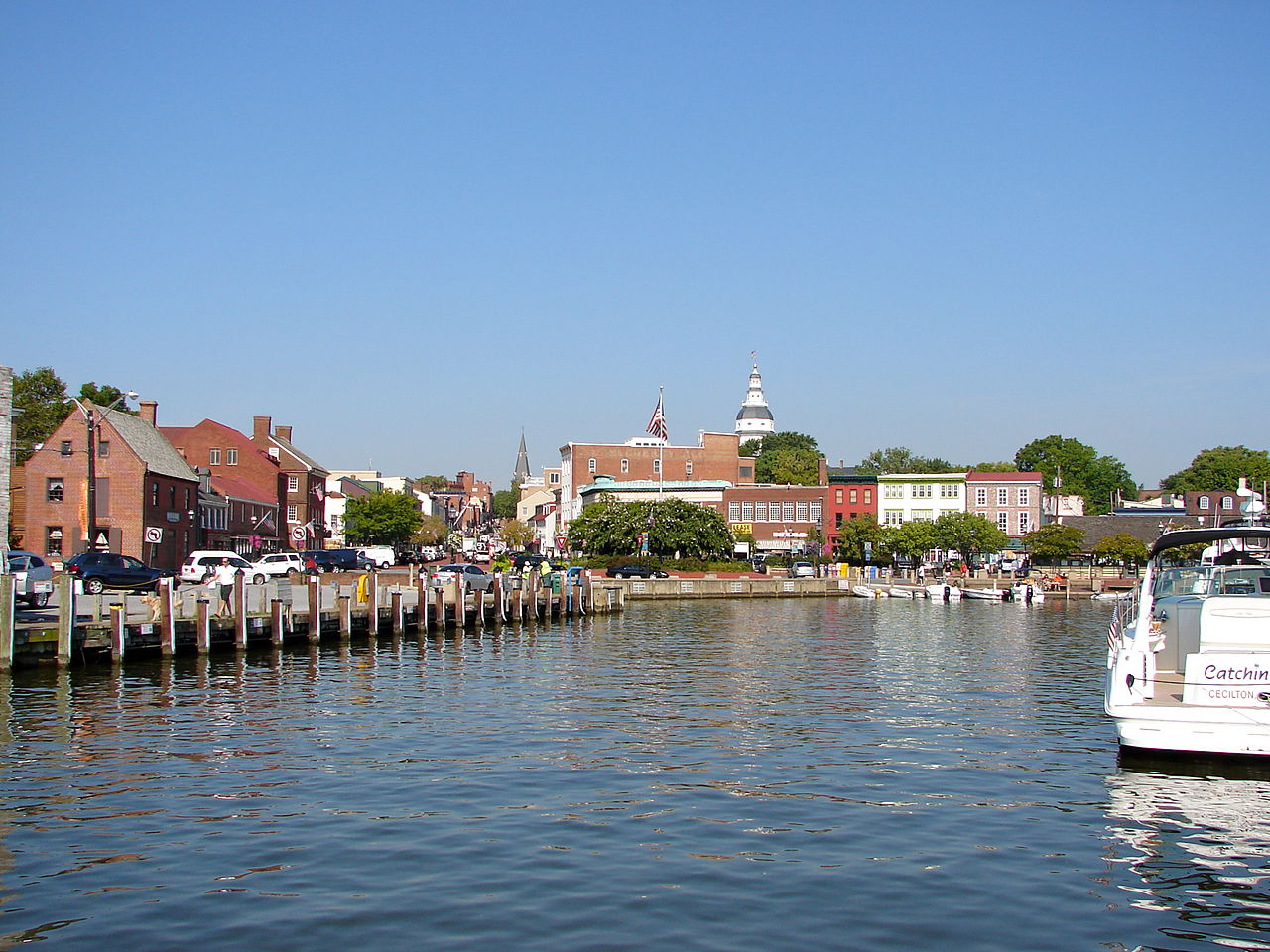
The waterfront is where Annapolis earns its reputation as what is often called the sailing capital of the U.S. City Dock sits at the foot of Main Street and frames a view that has barely changed in outline since the colonial period — church steeples, brick buildings, and masts above the water. The narrow inlet known as Ego Alley runs parallel to the dock and allows boaters to cruise slowly past the crowd of onlookers lining the bulkhead, a summertime ritual that never quite loses its appeal.
From City Dock, the Annapolis Waterfront walkway connects north toward the Naval Academy's seawall and south toward Eastport. Walking the full loop at a relaxed pace takes well under an hour and gives a strong sense of how the city relates to the water that defines it.
Sandy Point State Park, about ten minutes northeast of downtown Annapolis by car, offers the most direct public access to the open Chesapeake Bay. The park has a sandy beach, boat ramps, and views of the Bay Bridge. Parking and access are ticketed; check Maryland DNR's website for current fees and seasonal hours, since both vary significantly.
Parks and Outdoor Spaces
Quiet Waters Park is a 340-acre Anne Arundel County park on the South River with paved trails suitable for cycling and walking, picnic areas, a dog park, and a café open seasonally. It's the most used green space in the immediate Annapolis area for locals looking for something other than the waterfront. No admission is charged for most uses; the parking lot operates on a fee system, so check the county's parks page for current rates.
Jonas Green Park sits on a small peninsula at the confluence of Weems Creek and the Severn River, offering water views in multiple directions and a boat launch. It's a quieter alternative to City Dock for anyone who wants the bay without the foot traffic.
The area around the U.S. Naval Academy also fronts the Severn River, and the Academy Bridge and adjacent seawall provide one of the cleaner elevated views of the river channel and the downtown skyline behind it.
Neighborhoods to Wander
Downtown Annapolis / Historic District is the obvious starting point. Main Street descends from the State House to City Dock, lined with independent shops, galleries, and restaurants. The side streets — particularly Maryland Avenue and State Circle — hold much of the best 18th-century architecture. This is a walkable neighborhood where getting slightly lost is a reasonable strategy.
Eastport sits just across Spa Creek from downtown, connected by the Spa Creek drawbridge. It has a working-marina character the historic district doesn't — boatyards, chandleries, and a cluster of restaurants and bars with direct water views. The Eastport neighborhood tends to run quieter than downtown, which makes it a useful contrast when the historic district fills with weekend visitors. The Eastport-Annapolis Sailing School operates along the creek here for anyone who wants to get on the water rather than just look at it.
Maryland Avenue stretches northwest from State Circle through a corridor of antique dealers, art galleries, and a few independent specialty shops. It's shorter than Main Street but gives a different sense of the city — more residential, less tourist-oriented.
Planning Notes
Annapolis is compact enough that the historic district, waterfront, and Eastport are all reachable on foot from one another without needing a car. Parking in the downtown core is managed and can be tight on weekends, particularly in warm-weather months; the city and county operate several garages, and checking the Annapolis Department of Transportation's current guidance before arriving will save frustration. For visitors arriving from Baltimore or Washington, D.C., Annapolis is reachable by bus via Maryland Transit Administration service; check MTA Maryland's official site for current schedules and fares, since service patterns change.
The Best Time to Visit Annapolis page walks through seasonal considerations in more depth — the city is genuinely worth visiting outside of summer, when crowds thin considerably and the architecture is easier to appreciate without the foot traffic. And if you're still deciding what to prioritize, the full Annapolis Travel Guide offers an orientation to the city's major draws alongside food and practical logistics.
For dining, Annapolis has well over 300 restaurants and cafés across a range of cuisines and price points, with a particular concentration of seafood-forward spots given the bay access. The Where to Eat in Annapolis page covers the landscape in more detail.