Top Landmarks in Annapolis
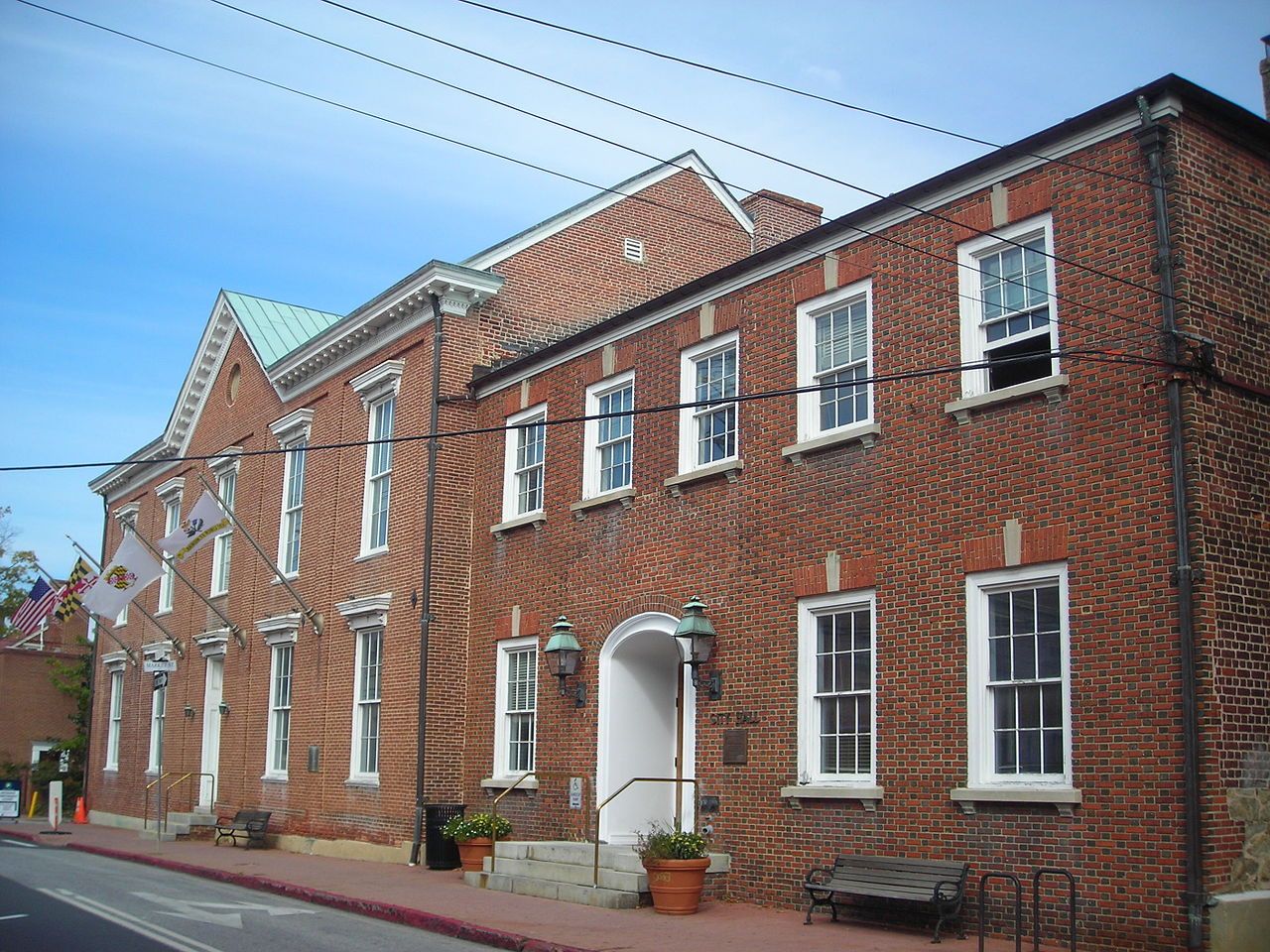
Annapolis, Maryland sits at the mouth of the Severn River where it meets the Chesapeake Bay, and the city's compact scale means many of its most recognizable sites are close enough to cover on foot in a single day. For a city of roughly 40,000 residents, Annapolis carries an outsized amount of American history — colonial-era brick and mortar still lines the same circles and lanes where governors and Continental Congress delegates once walked. Whether you are arriving for a weekend or fitting landmarks into a longer trip, this guide covers what is actually here, how the sites cluster, and how to connect them sensibly. For a suggested day-by-day framework, see the Annapolis 1-Day Itinerary or Annapolis 3-Day Itinerary.
The Maryland State House
The most recognizable building on the Annapolis skyline is the Maryland State House, positioned at the top of State Circle so that streets radiate outward from it like spokes. It is the oldest state capitol in the United States still in continuous legislative use, which places it in a category entirely its own among American civic buildings. The wooden dome — constructed without metal nails in an era when that was simply how large domes were built — remains a focal point visible from much of downtown.
The building's historical weight is considerable. The Continental Congress met here in 1783 and 1784, and it was inside these walls that George Washington resigned his commission as commander-in-chief of the Continental Army and where the Treaty of Paris was ratified, formally ending the Revolutionary War. Exhibits inside document those events with period artifacts and context. The State House is publicly accessible when the legislature is not in session; check the official Maryland State Archives and legislature websites for current access information before visiting.

The United States Naval Academy
A short walk from the downtown historic district, the United States Naval Academy occupies a significant stretch of the Severn River waterfront. Founded in 1845, it remains one of the country's premier military institutions and draws visitors year-round to its grounds, chapel, and museum. The Academy's Beaux-Arts chapel, with its copper-green dome, is visible from several vantage points along the Annapolis waterfront and is worth approaching up close. Below the chapel crypt lies the tomb of John Paul Jones, the Revolutionary War naval commander, which is a commonly visited stop for those touring the campus.
The Naval Academy Museum, housed in Preble Hall on the Academy grounds, holds ship models, navigational instruments, and artifacts spanning centuries of American naval history. Visitor access to the grounds requires passing through a security checkpoint; current entry requirements, visitor hours, and permitted areas are detailed on the Academy's official website.
City Dock and Ego Alley
City Dock is the gravitational center of Annapolis waterfront life. The harbor here — colloquially known as "Ego Alley" because of the steady parade of boats motoring slowly through the narrow channel to be seen — has served as a working port since the colonial period. Today the dock area is surrounded by restaurants and shops, and the scene shifts noticeably with the seasons: busy with sailing traffic in warm months, quieter but atmospheric in winter.
The dock is the logical endpoint for any walking tour of downtown Annapolis and a natural gathering point. From here you can look out across the harbor toward the Severn River and the Naval Academy grounds. For guidance on where to eat in this area, the Where to Eat in Annapolis page covers the surrounding options.
The Kunta Kinte–Alex Haley Memorial
At the edge of City Dock stands the Kunta Kinte–Alex Haley Memorial, a significant and thoughtfully executed tribute to the enslaved people brought to Annapolis through the transatlantic slave trade. Kunta Kinte, whose story was documented in Alex Haley's widely read book *Roots*, is believed to have arrived at this port in 1767. The memorial includes a central sculpture of Haley reading to three children and a series of plaques that trace the broader history of slavery's arrival in the region.
The memorial makes explicit what is sometimes left implicit in historic port cities: that the same docks which brought prosperity to Annapolis also brought human suffering on a large scale. It is an anchor point for understanding the fuller complexity of the city's colonial history and is located steps from the water's edge at City Dock.
William Paca House and Garden
A few blocks from State Circle, the William Paca House is an 18th-century Georgian mansion that belonged to William Paca, a signer of the Declaration of Independence and three-term governor of Maryland. The five-part house was built in the 1760s and is one of the better-documented colonial-period homes surviving in the mid-Atlantic.
Behind the main structure, the formal terraced garden has been carefully restored using archaeological evidence and historic accounts. The two-acre garden descends in terraces toward a pond and a Chinese Chippendale bridge, representing a serious effort to reconstruct what an 18th-century pleasure garden actually looked like rather than a generalized colonial aesthetic. The house and garden are operated as a museum; check the Historic Annapolis Foundation website for current visiting information.
Hammond-Harwood House
Completed in 1774 and designed by William Buckland — one of the most accomplished architects working in colonial America — the Hammond-Harwood House on Maryland Avenue is considered a high point of the Georgian style in North America. The five-part Palladian composition is symmetrical and restrained, with detailed carving around the entrance doorway that has been widely studied and reproduced in architectural history.
The house is preserved and interpreted as a museum, with period furnishings and rotating exhibits on colonial Annapolis life. It sits close to the Chase-Lloyd House directly across Maryland Avenue, making the two a convenient pairing for anyone interested in the concentration of 18th-century domestic architecture along this street.
Chase-Lloyd House
Directly across from Hammond-Harwood, the Chase-Lloyd House dates to roughly the same period and is associated with Samuel Chase, another Declaration of Independence signer, who began construction in the 1760s before selling it to Edward Lloyd IV. The interior staircase is often singled out for its craftsmanship. The house has operated for much of its history as a home for elderly women, a use established in 1886 that continues today, which means interior access is limited. The exterior and its relationship to the Maryland Avenue streetscape remain part of what makes that block one of the more coherent surviving colonial streetscapes in the country.
St. Anne's Church
Church Circle, one of the two major circles in Annapolis's baroque street plan (the other being State Circle), is anchored by St. Anne's Episcopal Church. The parish was established in 1692, making it one of the oldest Anglican parishes in Maryland. The current church building dates to the 19th century — earlier structures on the site were destroyed by fire — but the churchyard contains graves from much earlier periods and the congregation's records are among the oldest in the state.
The circle itself is a useful orientation point. From Church Circle, Maryland Avenue leads toward the Naval Academy gate, while other streets angle out toward State Circle and the waterfront. Sitting at the intersection of several of Annapolis's most historically significant corridors, St. Anne's is worth pausing at even for visitors with no particular interest in ecclesiastical architecture.
Banneker-Douglass Museum
Located on Franklin Street, the Banneker-Douglass Museum is Maryland's official repository for African American material culture, named for mathematician and surveyor Benjamin Banneker and abolitionist Frederick Douglass, both of whom had significant Maryland ties. The museum occupies a 19th-century former church building and holds rotating and permanent exhibits on the history and contributions of African Americans in Maryland from the colonial period to the present.
It is one of the less-trafficked landmarks on this list relative to its significance, and it offers a perspective on Annapolis and Maryland history that the more frequently visited colonial mansions do not cover in depth. Confirm current exhibition schedules and access on the museum's official site.
Putting It Together: A Walkable City
Annapolis rewards visitors who are willing to move slowly on foot. The core cluster — Maryland State House, St. Anne's Church, William Paca House, Hammond-Harwood House, Chase-Lloyd House — is compressed into an area where nothing is more than a five- to ten-minute walk from anything else. City Dock and the Kunta Kinte–Alex Haley Memorial extend that walk toward the waterfront, and the Naval Academy gate is accessible from the dock area or from Maryland Avenue.
A reasonable approach: start at State Circle to get your bearings with the State House at the center, walk Maryland Avenue toward the Naval Academy passing Hammond-Harwood and Chase-Lloyd, then loop back through the waterfront by way of City Dock and the memorial before heading inland again toward William Paca House and the Banneker-Douglass Museum. The Annapolis 1-Day Itinerary maps out a version of this route with additional context on timing.
Parking in Annapolis's historic core can be tight, particularly on weekends. Garages near the waterfront are the most practical option for those arriving by car, but it is worth confirming current rates and availability through the city's official parking resources. Annapolis does not have a subway system, but local and regional bus service connects the city to the broader Washington–Baltimore metro area.
For a broader overview of what else the city offers beyond its landmarks, the Annapolis Travel Guide and Best Things To Do in Annapolis pages are good starting points. If you are trying to decide when to plan your trip, the Best Time to Visit Annapolis page covers seasonal considerations, and the Annapolis FAQ addresses common practical questions.