Best Things To Do in Newark

Newark, New Jersey is the largest city in the state, with a population of more than 307,000 people packed into a compact urban footprint just across the Passaic River from the New York metro area. Its position at the crossroads of major transit lines — rail, highway, and air — has historically made it one of the busiest commercial hubs on the East Coast. That same density of infrastructure has also produced a city with a genuinely broad range of things to do: major parks designed by one of America's most celebrated landscape architecture firms, a well-regarded art museum, a performing arts center that draws national touring acts, historically significant neighborhoods, and a waterfront that has been gradually reimagined as public space.
First-time visitors often arrive expecting little and leave with a longer list for next time. Newark rewards a slow, walking pace more than a quick drive-through.
For a structured plan, start with the Newark 1-Day Itinerary or the Newark 3-Day Itinerary.
Parks & Outdoor Spaces
Branch Brook Park — Free
Branch Brook Park is one of the most commonly visited green spaces in Newark, and its reputation extends well beyond the city limits. The park was designed by the Olmsted Brothers firm — the same landscape architecture practice behind many of America's well-known urban parks — and stretches for more than four miles through Newark's northern neighborhoods. Walking and cycling paths wind through the park, and there's a lake suitable for recreational use, athletic fields, and plenty of open lawn.
The single biggest draw for out-of-towners is the Japanese cherry blossom collection, which is among the largest in the United States and typically peaks in early spring. During bloom season the park fills with visitors from across the region. The rest of the year it remains a practical, attractive green space for jogging, dog-walking, or a picnic.
Weequahic Park — Free
On the city's southern end, Weequahic Park is anchored by a good-sized lake and surrounded by wooded trails, picnic areas, and a golf course. The neighborhood around the park has its own place in American literary history, and the park itself has the feel of a genuine neighborhood green space rather than a tourist destination — which is part of its appeal.
Newark Riverfront Park — Free
Along the Passaic River, Newark has developed a public waterfront corridor with walking and cycling paths, open lawns, and river views. The park hosts outdoor events during warmer months and serves as a connector between different parts of the city. It's worth visiting for the perspective it provides on Newark's industrial waterfront and, on clear days, views toward the surrounding region.
Museums & Cultural Institutions
Newark Museum of Art — Check Site for Admission
The Newark Museum of Art is among the largest art museums in New Jersey, with a permanent collection that spans American art across multiple centuries, African art and artifacts, Asian art, and decorative arts. The museum campus is larger than it first appears: in addition to the main galleries, it includes the Ballantine House — a meticulously restored Victorian mansion listed on the National Register of Historic Places — as well as a planetarium and a historic firehouse. Plan for at least two to three hours if you want to move through the major galleries. Check the museum's official site for current hours and admission information before visiting.
New Jersey Performing Arts Center (NJPAC) — Ticketed Events
NJPAC is one of the premier performing arts venues in the northeastern United States. Located in downtown Newark adjacent to Military Park, the complex hosts the New Jersey Symphony Orchestra alongside a busy calendar of jazz, dance, theater, international music, and large touring productions. The building itself is architecturally distinctive within the downtown streetscape. Ticket prices and event schedules change frequently; the official NJPAC website is the right place to plan around.
Newark Public Library — Free
The main branch of the Newark Public Library occupies a Beaux-Arts building in the downtown core that is worth seeing on its own terms. The library's collections include substantial archives relating to New Jersey and Newark history, making it a useful stop for anyone curious about the city's past. Entry to the library is free, and the reading rooms are open to the public.
Historic Sites & Architecture
Newark's built environment contains layers of history from the colonial period forward. Much of it is accessible for free simply by walking.
Military Park and Washington Park
These two connected parks form the civic center of Newark's downtown and have served that function since the city's earliest decades. Military Park was substantially renovated in recent years and features notable public sculpture, including a large bronze monument depicting soldiers from the city's various military engagements. Washington Park sits directly adjacent and anchors the edge of the cultural district. Together they make a natural starting point for exploring downtown on foot.
Cathedral Basilica of the Sacred Heart
This Gothic Revival cathedral took more than fifty years to complete and is recognized as one of the largest churches in the United States. The exterior stonework is detailed and substantial; the interior stained glass is the primary attraction for most visitors. Whether or not you have any interest in religious architecture, the cathedral makes an impression at street level. Visiting hours and access policies are set by the cathedral and subject to change; check the official site before planning a visit.
Four Corners Historic District
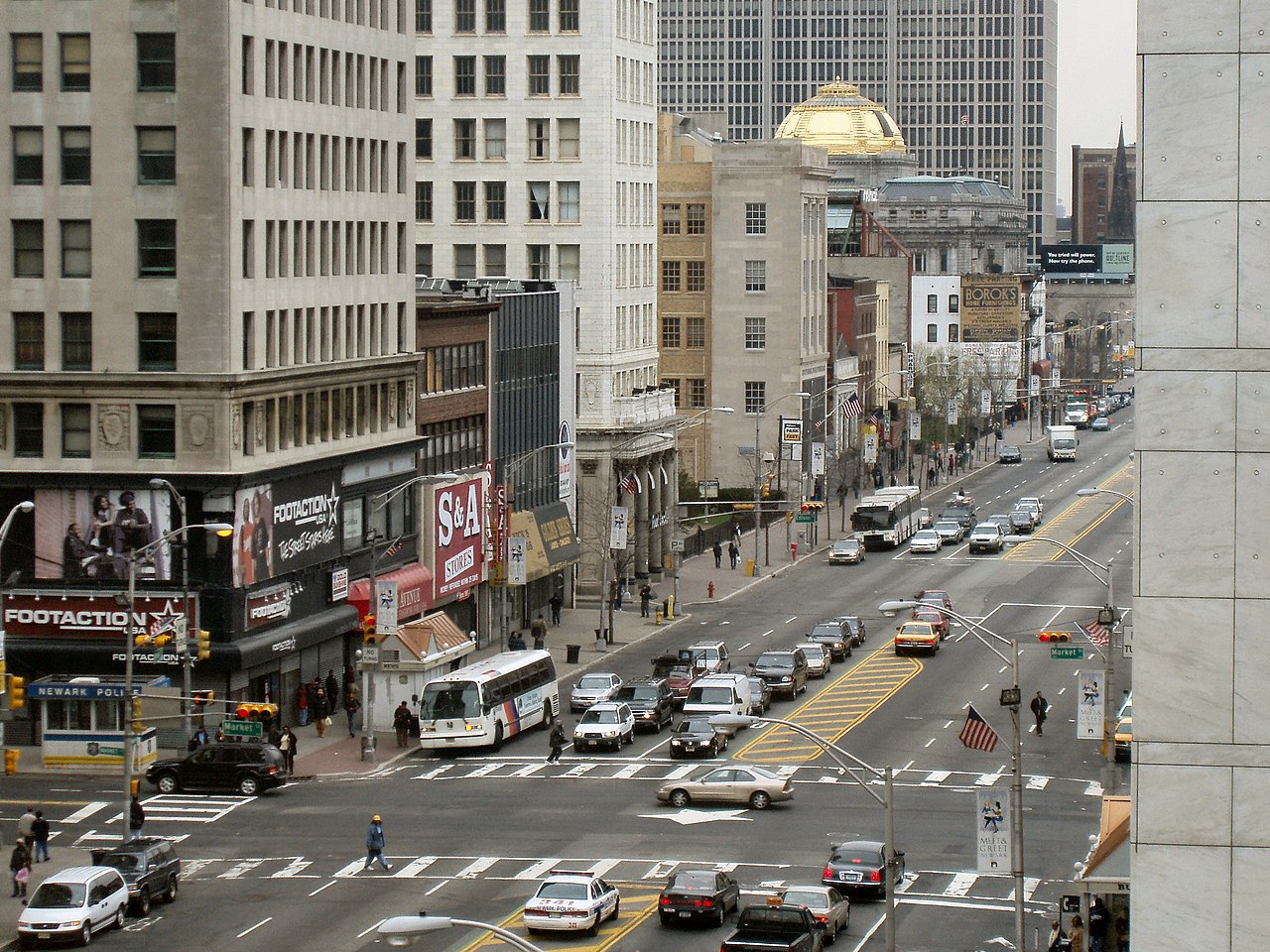
The intersection of Broad Street and Market Street — historically called Four Corners — was for generations the commercial heart of Newark. A number of historic buildings survive in the surrounding blocks, and the street grid itself reflects the city's colonial-era origins. Walking through this area provides a useful architectural timeline, from 19th-century commercial buildings to mid-century civic structures to more recent development.
For a more thorough overview of what's worth seeing, visit Top Landmarks in Newark.
Neighborhoods Worth Wandering
The Ironbound District
The Ironbound — referred to by longtime residents as "Down Neck" — is the neighborhood in Newark that receives the most attention from visitors, and that attention is well earned. Bounded by rail yards and the Passaic River, the neighborhood developed through successive waves of European and Latin American immigration and today carries a particularly strong Portuguese and Brazilian identity alongside substantial Spanish-speaking communities. The main commercial strip along Ferry Street is dense with restaurants, bakeries, fish markets, and specialty grocery stores. Wandering off Ferry Street into the surrounding residential blocks reveals the neighborhood's scale and the degree to which it functions as a self-contained community within the city. Newark has thousands of restaurants and cafes distributed across its neighborhoods, and the Ironbound accounts for a significant share of the dining options that draw visitors from outside the city. See Where to Eat in Newark for more context on the food scene.
Downtown Newark
Downtown has been in a sustained phase of reinvestment over the past decade, and the results are visible in the blocks surrounding Military Park, Halsey Street, and the Prudential Center. Galleries, small restaurants, and new residential buildings have appeared alongside long-standing institutions. The Halsey Street corridor in particular has attracted creative businesses and public art installations. It's a walkable area, and the mix of historic commercial architecture with newer construction makes it genuinely interesting to move through on foot, even without a specific destination.
Forest Hill
Forest Hill sits on the northern edge of Branch Brook Park and is known for its concentration of well-preserved early 20th-century residential architecture — Queen Anne, Colonial Revival, and Tudor Revival homes occupy many of the residential streets. It's not a commercial neighborhood in any significant way, but it's a pleasant area to walk through after spending time in the park, and the housing stock gives a clear picture of what Newark looked like during its period of peak prosperity.
Live Entertainment & Sports
Prudential Center — Ticketed Events
The Prudential Center arena is one of the larger entertainment venues in the New York metropolitan area and the home arena of the New Jersey Devils NHL franchise. Beyond hockey, the arena hosts major concerts, boxing matches, and family entertainment events throughout the year. The arena's location in the heart of downtown Newark means that event nights bring significant foot traffic to the surrounding blocks. Check the official Prudential Center website for current scheduling and ticket availability.
Newark Symphony Hall — Ticketed Events
Newark Symphony Hall opened in the 1920s as the Mosque Theatre and remains one of the city's great performance spaces. The interior retains its original ornate detailing, and visiting for a performance gives access to a building that most people wouldn't see otherwise. Programming ranges from orchestral concerts to community events to cultural performances reflecting Newark's diverse population. The official site carries the current calendar and ticketing information.
Getting Around Newark
Newark is well connected by public transit, which makes it genuinely easy to visit without a car. New Jersey Transit operates commuter rail lines into Newark Penn Station from across the state, and the Newark Light Rail provides short-haul connections between Penn Station, downtown, and Branch Brook Park. The PATH train runs frequently between Newark Penn Station and Manhattan, making Newark accessible as a day trip from New York City. Riders should check NJ Transit's and the Port Authority's official sites for current fare information, schedules, and any service changes; use contactless tap-to-pay where it's available.
If you're driving, street parking is generally available in residential neighborhoods but can be tight downtown, particularly during weekday business hours and on event nights near the Prudential Center. Parking structures are available in the downtown area; verify rates on arrival.
As with any large city, ordinary urban awareness applies — keep an eye on your surroundings and your belongings, particularly in crowded transit stations and busy commercial areas. Newark is a working city with the full range of urban dynamics that implies.
Day Trips from Newark
Newark's location puts several notable destinations within easy reach. Thomas Edison National Historical Park, operated by the National Park Service in nearby West Orange, preserves the laboratory complex where Edison and his team developed many of the inventions that shaped modern life — including early motion picture technology and the phonograph. The park is among the 36-plus NPS-affiliated sites accessible from the Newark area. Check the official NPS site for current hours, admission details, and tour availability.
The Gateway National Recreation Area, which spans sites in both New Jersey and New York, is accessible from the Newark region and offers beaches, wildlife refuges, and historic military sites across its different units.
Newark is a city that earns more attention than it typically receives. Its scale — more than 300,000 people in a dense, transit-connected footprint — means that nearly every category of urban activity is represented here, often at a quality level that compares favorably with much larger American cities. The transit connections to Manhattan are fast and frequent, which makes Newark practical as a half-day destination or a dedicated weekend visit. For a broader overview of what the city offers, see the Newark Travel Guide: Things to Do, Landmarks, Food, and Itineraries, or get your common questions answered at the Newark FAQ.