Alexandria 1-Day Itinerary

Alexandria, Virginia sits just across the Potomac River from Washington, D.C., making it one of the more accessible day-trip destinations on the East Coast — yet it holds up as a full destination on its own terms. The city's roughly 156,000 residents share a place that mixes colonial-era streetscapes with a working waterfront, a dense concentration of museums and galleries, and a dining scene large enough to take weeks to work through. For a first-time visitor with a single day, the goal is practical: cover the walkable core of Old Town, take in the waterfront, visit a landmark or two, and finish with a proper meal.
This itinerary runs morning through evening. Timings are approximate and meant as loose anchors, not a strict schedule. Check ahead for current hours, admission policies, and any closures before your visit.
For a broader look at what Alexandria has to offer beyond one day, the Alexandria Travel Guide: Things to Do, Landmarks, Food, and Itineraries is a good starting point.
Getting to Alexandria
Alexandria's Old Town is served by the Washington Metro's Blue and Yellow lines at the King Street–Old Town station. Trains run from downtown D.C. in roughly 20–25 minutes depending on your starting point. The Metro uses a contactless tap-to-pay system; check WMATA's official website for current fares and schedules before your trip.
If you're driving, street parking in Old Town is limited, and garage rates vary. Arriving by Metro or rideshare keeps things straightforward and spares you from circling blocks mid-morning.
Once at the King Street–Old Town station, a trolley service has historically operated along King Street between the station and the waterfront. Check with the City of Alexandria's official website for current service status before counting on it — transit offerings can change.
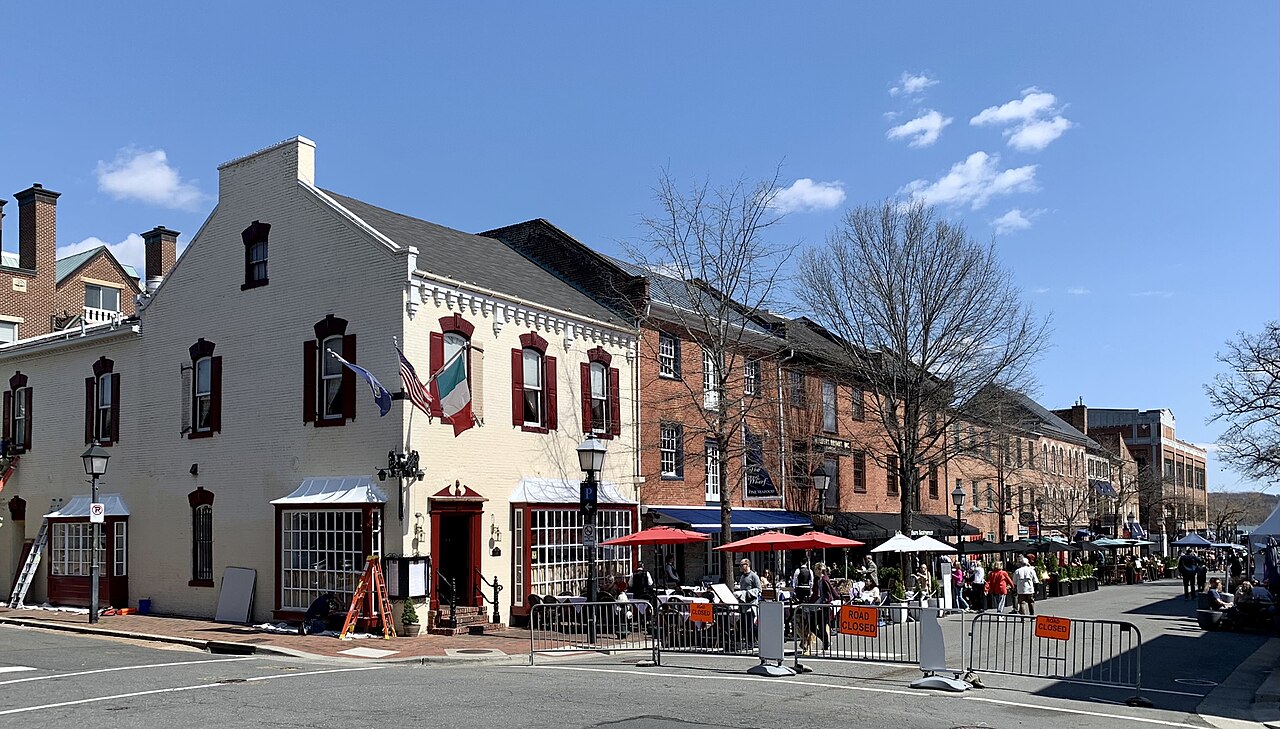
Morning: Old Town on Foot
Start at King Street–Old Town Metro, then walk east.
King Street is Alexandria's main commercial corridor, running roughly a mile from the Metro station down to the Potomac waterfront. Walking it from west to east gives you a natural introduction to Old Town's character: brick sidewalks, Federal-style rowhouses, and a mix of independent shops and restaurants filling storefronts with genuine historical depth.
Your first stop — a short detour north of King Street — is Gadsby's Tavern Museum. The site encompasses two 18th-century buildings: a tavern dating to 1785 and an adjoining hotel from 1792 that hosted prominent figures of the early republic, including George Washington. The museum walks visitors through what daily life, commerce, and travel looked like in colonial and post-Revolutionary America. Check the museum's official site for current hours and admission before you go.
A few blocks away, Christ Church on Washington Street is an Episcopal parish dating to 1773. The church is open to visitors and is notable for its early congregants — Washington was among them — and its well-preserved Georgian interior. It's a quiet stop that takes perhaps 20 to 30 minutes but sets useful context for the neighborhood's age.
On your way toward the water, pass through Market Square, a historic civic plaza in front of City Hall off King Street. The square has served as a public gathering and commercial space for the city for centuries, and while it functions as an open plaza today, it's one of those spots that earns a moment of consideration just for how long it has been in use.
Midday: The Waterfront and Torpedo Factory
Head east to the waterfront — about a 10 to 15 minute walk from Market Square.
Alexandria's waterfront along the Potomac River is a natural focal point for midday. The Torpedo Factory Art Center, right on the water, is one of the more distinctive cultural spaces in the D.C. metro area. The building is a former munitions factory from World War II, now home to working artist studios spread across multiple floors. Visitors can walk through and watch artists at work in studios ranging from painting and ceramics to printmaking, fiber arts, and jewelry. Entry and studio policies vary; confirm on the Torpedo Factory's official site before your visit.
The waterfront itself is worth time just to look around. The views across the Potomac toward Maryland offer a geographic orientation that's easy to miss when you're focused on street-level history, and there are benches, docks, and open space that make for a comfortable midday break.
For lunch, the blocks along and adjacent to King Street carry a high concentration of restaurants — from casual cafes to sit-down spots drawing on American, Italian, Middle Eastern, Thai, and other cuisines. The variety is real, and you're unlikely to walk more than a couple of minutes without options. For a more thorough look at the dining scene, the Where to Eat in Alexandria guide covers the landscape in more detail.
Afternoon: The Masonic Memorial and More of Old Town
Walk back west along King Street toward the Metro — roughly 15 to 20 minutes.
One of Alexandria's most visually prominent structures is the George Washington Masonic National Memorial, sitting atop Shooters Hill at the western end of King Street. The building is immediately recognizable: a tall granite tower modeled loosely on the ancient Lighthouse of Alexandria, visible from much of the city and the surrounding area. It functions as a museum, memorial, and active Masonic lodge. Guided tours run inside the building and include access to upper observation levels with views back over Old Town, the Potomac, and toward Washington, D.C. Check the memorial's official website for current tour availability and admission details.
If you have time earlier in the afternoon, the Carlyle House Historic Park is worth a look before heading to the memorial. It's a well-preserved Georgian Palladian manor from 1753 near the north end of Fairfax Street, operated as a historic site and museum. Its grounds offer a brief contrast to the pedestrian street-level character of the rest of Old Town. Check current hours and admission on the official site.
For a fuller list of what Old Town and Alexandria's broader area has to offer, the Best Things To Do in Alexandria and Top Landmarks in Alexandria pages go deeper than a single day allows.
Evening: Dinner and the Waterfront
By early evening you'll naturally find yourself back in the Old Town core with a simple decision: dinner before heading home, or one more stretch along the waterfront before you eat.
Alexandria's dining scene is substantial for a city its size — there are roughly 4,000 restaurant and café establishments in the broader area, with a significant portion concentrated in and around Old Town. Along and just off King Street, options include seafood, steakhouses, casual American fare, and a range of international cuisines. The waterfront-adjacent restaurants in particular can book up on weekends, so checking availability ahead of time is worthwhile. There are also plenty of faster options if you're catching a train.
If the weather is reasonable, a short post-dinner walk along the waterfront is a comfortable way to close the day. The waterfront area stays active into the evening and sees consistent foot traffic from other diners and pedestrians. It's an easy, low-effort end to the itinerary.
For the return trip, the King Street–Old Town Metro station gets you back into D.C. within half an hour on most lines.
Backup Options
If a particular attraction is closed or a tour doesn't align with your timing, a few good alternatives:
- The Stabler-Leadbeater Apothecary Museum on South Fairfax Street is one of the oldest apothecary shops in the country, now preserved as a museum. Check their site for hours and admission.
- Lee-Fendall House Museum and Garden, near the corner of Oronoco and North Washington Streets, is a Federal-style house with documented connections to the Lee family of Virginia.
- Walking the residential blocks north of King Street requires no admission and covers some of the best-preserved streetscapes in the area — Federal Hill and the blocks of Old Town North are worth a slow walk even without a specific destination.
Planning Notes
A single day in Alexandria is enough to cover the highlights described here without feeling rushed, provided you're not trying to do deep tours at every stop. The city rewards moving at a moderate pace rather than ticking off a checklist.
If you'd like to extend the trip, the Alexandria 3-Day Itinerary maps out a more thorough visit that includes neighborhoods and sites that don't fit into a one-day format. For questions about when to go, the Best Time to Visit Alexandria page covers seasonal considerations. And for general trip-planning questions, the Alexandria FAQ is a practical reference.
*Current hours, admission prices, and transit details can change. Confirm all specifics on official sites before your visit.*