Top Landmarks in Pittsfield

Pittsfield, Massachusetts, sits at the center of the Berkshires, and its landmarks reflect that dual identity: a compact downtown built around a New England common, and a surrounding landscape of historic homesteads, museums, and conserved land. For visitors piecing together a walking route or a longer stay, it helps to know which sites cluster together downtown and which require a short drive. Below is an overview of the landmarks most commonly associated with Pittsfield and how they relate to one another geographically.
Park Square and the Downtown Core
The natural starting point for exploring Pittsfield is Park Square, the small central common that has anchored the city's downtown since its early days. The square is bordered by the First Church of Christ, a Congregational church with a tall steeple that is a recognizable feature of the downtown skyline and often photographed as a symbol of the city. Park Square and its surrounding streets form the Park Square Historic District, a concentration of civic and commercial buildings from the 19th and early 20th centuries that give downtown Pittsfield much of its architectural character.
A short walk from the square brings you to the Berkshire Athenaeum, the city's public library, which houses local history and archival collections, including material related to author Herman Melville, who lived in the area. Nearby, the Colonial Theatre is a restored early 20th-century performance venue known for its ornate interior and ongoing programming; checking its official site ahead of a visit is the best way to see what's currently scheduled. Because these sites sit within easy walking distance of one another, downtown Pittsfield is well suited to an on-foot itinerary, and the Pittsfield 1-Day Itinerary lays out one way to sequence them.
Museums and the Arts District
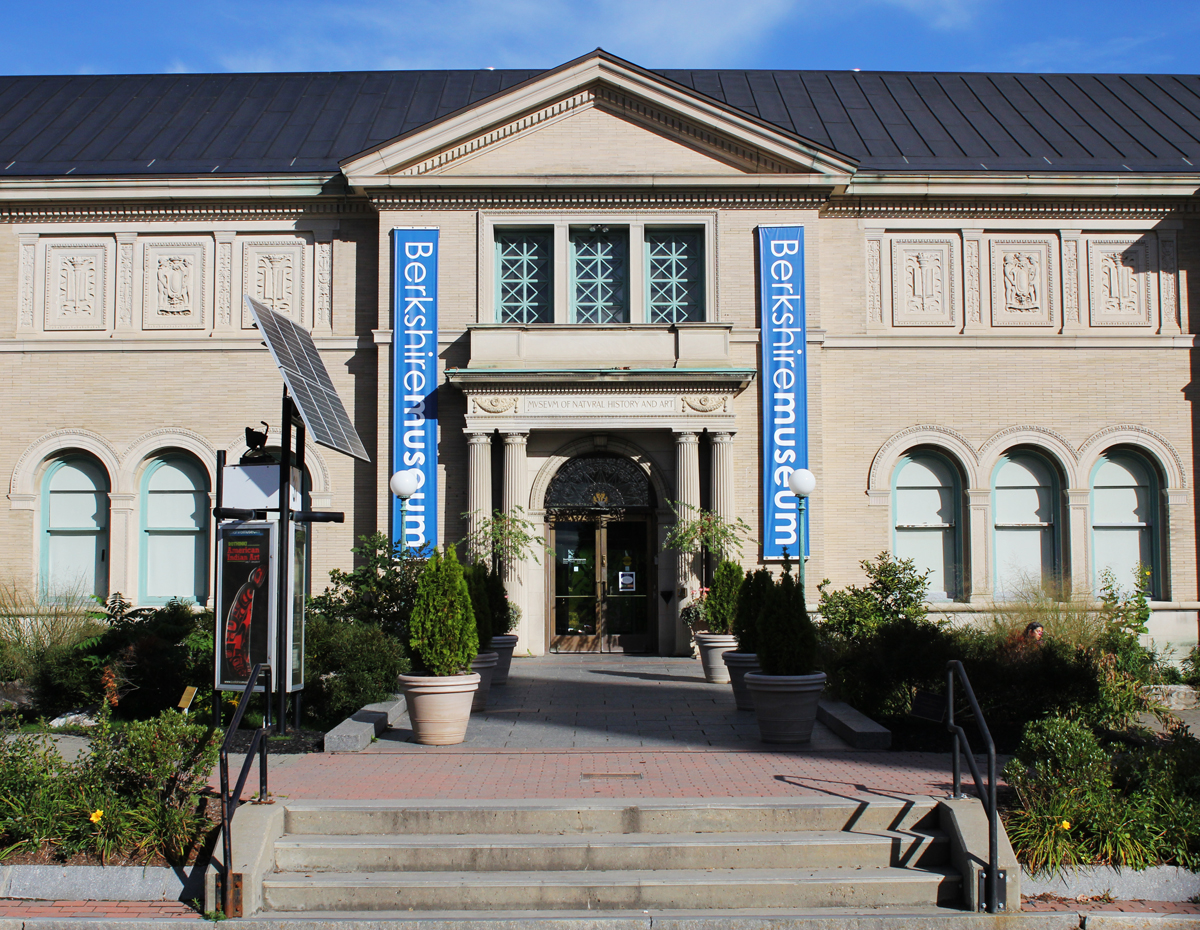
Just beyond Park Square, the Berkshire Museum is a long-standing cultural institution combining art, natural history, and science exhibits under one roof. It's a common stop for visitors who want an indoor complement to the city's outdoor and historic sites, and it's close enough to the Colonial Theatre and Park Square that the three can reasonably be combined in a single afternoon. This stretch of downtown carries a notable concentration of galleries, performance spaces, and public art along a few connected blocks, making it a natural pairing for anyone visiting the museum or theater.
Herman Melville's Arrowhead
A few minutes outside the downtown core, Arrowhead is the farmhouse where Herman Melville lived while writing *Moby-Dick*, and it's maintained today as a historic house museum operated by the Berkshire Historical Society. The property includes period rooms and grounds with views toward Mount Greylock, which is often cited as part of what inspired Melville's writing. Because Arrowhead sits outside the immediate downtown cluster, it's best visited by car or a short rideshare trip rather than folded into a walking loop, and it pairs naturally with a broader look at the city's literary and historical sites.
Hancock Shaker Village
On the western edge of the Pittsfield area, Hancock Shaker Village preserves a former Shaker religious community, including its well-known round stone barn and a collection of original buildings and farmland. While technically situated near the Pittsfield–Hancock line, it's widely associated with Pittsfield and is commonly treated as one of the area's signature historic sites. Given the distance from downtown, it works best as a half-day or dedicated outing rather than a stop on a downtown walking route.
Union Station and the Intermodal Center
Pittsfield's Union Station area, now home to the city's intermodal transportation center, reflects the city's history as a rail hub for the Berkshires. The building and surrounding area retain some of that historic character while continuing to serve as a practical gateway for travelers arriving by train or bus. It sits close enough to downtown to be included on foot for those curious about the city's transportation heritage.
Parks and Green Space
Pittsfield's landmarks aren't limited to buildings. Springside Park, on the north side of the city, offers walking trails, ponds, and green space that provide a change of pace from the downtown historic district. Farther out, Pittsfield State Forest is a popular destination for hiking, and nearby Balance Rock, a glacial erratic that draws visitors interested in the area's geology, is a short drive further and worth combining with a visit to the forest. Both are best reached by car and make sense as a nature-focused addition to a multi-day visit rather than a downtown walking stop.
Planning a Route
Because Pittsfield's landmarks split fairly cleanly into a walkable downtown cluster (Park Square, the Berkshire Athenaeum, the Colonial Theatre, and the Berkshire Museum) and a set of outlying sites reached by car (Arrowhead, Hancock Shaker Village, and the two major parks), it's worth planning around that geography rather than trying to see everything in one pass. A single day tends to suit the downtown core well, while a longer stay allows time for the historic homesteads and natural areas outside the city center. The Pittsfield 3-Day Itinerary offers one way to spread these sites across a longer visit, and the Best Time to Visit Pittsfield page is a useful reference for thinking about seasonal conditions, since outdoor sites like Pittsfield State Forest vary considerably by time of year.
For a broader sense of what else the city offers beyond its landmarks, see the Best Things To Do in Pittsfield and Where to Eat in Pittsfield pages, which round out a visit with additional activities and dining options near these sites. For quick answers to common logistical questions, the Pittsfield FAQ and the main Pittsfield Travel Guide: Things to Do, Landmarks, Food, and Itineraries are good starting points before you go.
As with any city, ordinary urban awareness is worth keeping in mind when moving between downtown sites on foot, particularly after dark, and it's always worth checking official sources for current hours, admission policies, and any seasonal closures before visiting a specific site, since these details can change.