Top Landmarks in Harrisburg
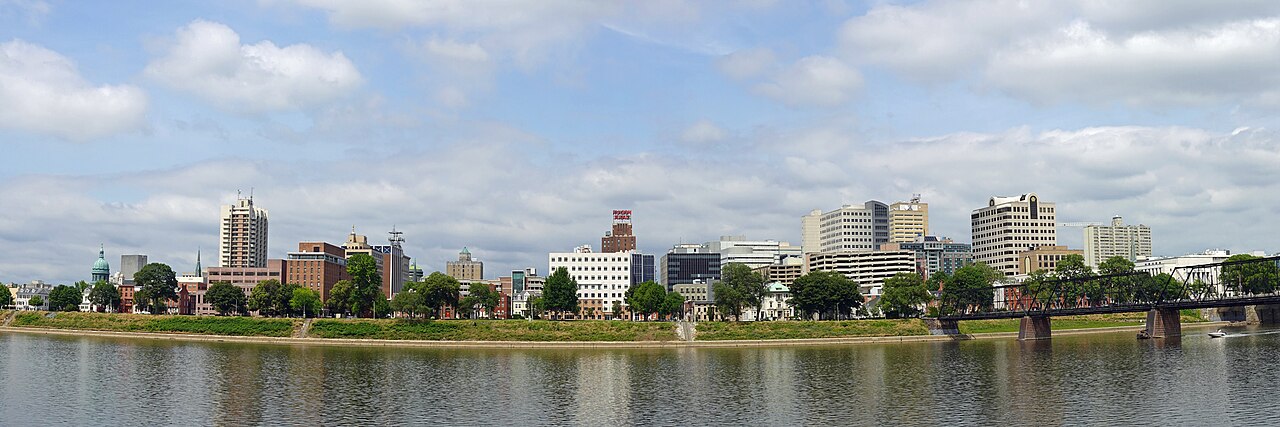
Pennsylvania's capital sits on the eastern bank of the Susquehanna River, and that geography shapes nearly everything about how Harrisburg, PA is experienced. The river defines the western edge of downtown, the Capitol dome anchors the skyline from the east, and between those two points a walkable core holds much of what first-time visitors come to see. With a population of roughly 50,000 and a compact downtown, Harrisburg, PA rewards travelers who are willing to cover a few blocks on foot—most of the central landmarks sit within reasonable reach of one another, and several of the most commonly visited sites can be combined in a single outing without a car.
Pennsylvania State Capitol
If there is one building that defines Harrisburg, PA for most visitors, it is the Pennsylvania State Capitol. Completed in 1906 and designed by Joseph Huston, the structure draws heavily on Italian Renaissance forms, with a prominent dome that reaches roughly 272 feet and stands as the most recognizable point on the city's skyline. Inside, the rotunda features large-scale murals by artist Violet Oakley, and the grand staircase—modeled after the Paris Opera House—is worth taking slowly.
The Capitol is a working legislative building, and free public tours of the interior are offered on a regular schedule. Because schedules and access policies can change depending on legislative sessions and events, check the official Pennsylvania State Capitol website before you go. The surrounding Capitol Complex includes connected legislative office buildings and well-maintained grounds that are open to the public throughout the year.

Pennsylvania State Museum
Directly adjacent to the Capitol campus, the Pennsylvania State Museum covers the natural history, archaeology, and cultural history of the commonwealth. Permanent collections include Native American artifacts, natural science exhibits, a planetarium, and a notable gallery of Pennsylvania fine art spanning several centuries. Because the museum sits immediately north of the Capitol, most visitors combine the two in a single morning or afternoon. Check the museum's official site for current hours and any admission details before making the trip.
Market Square and the Downtown Historic Core
A short walk west of the Capitol, Market Square has functioned as Harrisburg's central civic gathering point for most of the city's history. The square is surrounded by a mix of 19th- and early 20th-century commercial architecture, and it serves as a natural orientation point for the downtown. From here, the Capitol is roughly a five-minute walk east, and the Susquehanna riverfront is a few blocks west.
The blocks radiating out from Market Square form what most people think of as the historic downtown core. A number of the facades along Second and Third Streets date to the late 1800s and give the area a character that holds up against closer inspection. If you are trying to build a picture of what to do beyond the landmark circuit, the Best Things To Do in Harrisburg page covers the broader range of activities available in and around the city.
Whitaker Center for Science and the Arts
On Market Street near the heart of downtown, the Whitaker Center for Science and the Arts combines a hands-on science center, a large-format IMAX theater, and a performing arts venue under one roof. The science center portion draws families during the day, while the theater hosts films and live performances in the evenings. Current programming and any admission information are listed on the Whitaker Center's official website—it is worth checking in advance if you have a particular show or exhibition in mind.
Broad Street Market
About a mile north of the Capitol in the Midtown neighborhood, Broad Street Market is one of the oldest continuously operating public markets in the United States. The two connected market buildings date to the late 19th and early 20th centuries, and the vendors inside offer a range of produce, meats, baked goods, prepared foods, and handmade goods. The market operates on a limited weekly schedule rather than seven days a week, so confirming current hours on the market's official site before visiting will save a wasted trip.
The market is a good entry point into the Midtown neighborhood, which has developed a concentration of independent restaurants, galleries, and businesses in recent years. For an overview of dining options across Harrisburg, see Where to Eat in Harrisburg.
Italian Lake Park
A short walk from Broad Street Market, Italian Lake is a formal ornamental park developed in the 1930s. Two connected artificial lakes are flanked by planted grounds, walkways, and a small columned pavilion. The park is a popular spot for afternoon walks among residents and tends to be particularly photogenic in spring when flowering trees along the perimeter are in bloom. It is free, open year-round, and easily combined with a Midtown visit.
City Island and the Riverfront
Back near the downtown core, a pedestrian bridge from the western end of the city connects to City Island, a narrow strip of land in the middle of the Susquehanna River. The island holds a minor-league baseball stadium, open athletic fields, a small carousel, river access for kayaking and paddleboating (seasonal, operated by private vendors—verify availability directly), and walking paths with good views back toward the Harrisburg skyline. It is an informal, low-key outdoor destination rather than a structured attraction.
Running along the eastern bank of the Susquehanna, Riverfront Park extends along the waterfront for much of downtown's length. The greenway is popular with walkers and cyclists and is accessible from multiple points between the north and south ends of downtown. It is a practical and pleasant way to see the river corridor without needing a car.
National Civil War Museum
On the eastern edge of Harrisburg in Reservoir Park, the National Civil War Museum is one of the more substantive collections focused on the American Civil War in the eastern part of the country. The museum is notable for presenting both the Union and Confederate perspectives across a broad range of artifacts, photographs, personal accounts, and interactive exhibits—an approach that distinguishes it from many Civil War sites that focus on a single campaign or geographic area.
Reservoir Park itself occupies elevated ground with open views back toward downtown and the Capitol dome, making the setting worth a look even on the walk to and from the museum building. Check the official museum website for current hours and admission information before you go.
Fort Hunter Mansion and Park
About seven miles north of downtown Harrisburg along the Susquehanna, Fort Hunter Mansion and Park preserves a cluster of historic structures spanning different periods of Pennsylvania history. The site includes an 18th-century blockhouse associated with the original fortification, a federal-style mansion from the early 19th century, and several outbuildings. The grounds sit at the river's edge and include picnic areas and walking trails. Because of the distance from the downtown core, reaching Fort Hunter typically requires a car. The Dauphin County Parks system maintains the site; check with them for current open days and any seasonal hours.
How the Landmarks Cluster
For visitors based downtown, the Capitol building, Pennsylvania State Museum, Market Square, Whitaker Center, and Riverfront Park form a natural walking loop that can be covered in a half day. From Market Square, the Capitol is roughly five minutes on foot to the east, and the riverfront is a few minutes west. City Island adds another 20 to 30 minutes and is reachable on foot once you reach the water's edge.
Broad Street Market and Italian Lake Park are about 20 to 25 minutes on foot from downtown, or accessible via the local bus network—Capital Area Transit serves several corridors connecting downtown to Midtown. Check current routes and schedules with the transit authority directly, as service patterns can change.
The National Civil War Museum requires a short drive or a longer uphill walk to Reservoir Park. Fort Hunter is a separate half-day excursion best treated on its own.
For a structured way to sequence these landmarks, both the Harrisburg 1-Day Itinerary and the Harrisburg 3-Day Itinerary map out practical routes. For context on when to plan your visit, Best Time to Visit Harrisburg covers how the seasons affect what's open and accessible. Common planning questions are answered in the Harrisburg FAQ.
Practical Notes
Harrisburg, PA is connected to the Amtrak network through Harrisburg Station on Market Street, which puts rail arrivals within walking distance of several downtown landmarks. For those driving, surface lots and parking garages serve the Capitol and Market Square areas—verify current rates and availability with local operators, as pricing can change. As with any city, ordinary awareness of your surroundings is sensible, particularly after dark or in less-trafficked areas. The downtown and Capitol district see steady foot traffic during the day and during evening events.
For a full picture of what Harrisburg has to offer across categories, the Harrisburg Travel Guide: Things to Do, Landmarks, Food, and Itineraries is a useful starting point.