Best Things To Do in Boston

Boston is one of the most historically layered cities in the United States, and its compact geography makes it unusually walkable for a major American city. With a population approaching 664,000 and a median age in the low thirties, the city draws a steady mix of students, families, professionals, and visitors who come for its concentration of landmarks, green spaces, waterfront access, and cultural institutions. With roughly 1,135 mapped attractions, museums, and historic sites across the area, there is a lot to work through — and you don't need to rush.
Whether you're planning a single afternoon or an extended stay, this guide breaks down what Boston offers by category: outdoor spaces, cultural institutions, waterfront experiences, historic landmarks, and neighborhoods worth exploring on foot. For a more structured approach, the Boston 1-Day Itinerary and Boston 3-Day Itinerary offer sequenced suggestions based on your available time.
Historic Sites and the Freedom Trail
The Freedom Trail is the most logical starting point for first-time visitors to Boston. This marked walking route — identified by a red line on the pavement — connects sixteen sites across downtown Boston and Charlestown, including Faneuil Hall, the Paul Revere House, the Old North Church, and the Bunker Hill Monument. The trail passes through Boston National Historical Park, one of roughly eighteen National Park Service sites in and around the greater Boston area, and ranger-led programs are available at several stops throughout the year (check the NPS website for current schedules).
Most of the outdoor elements along the Freedom Trail are free to walk at any time. Some individual sites along the route are ticketed, while others request a donation or charge no admission at all — it varies by location, so checking each site's official website before you go will save confusion at the door.
In Charlestown, the USS Constitution — the oldest commissioned naval vessel still afloat in the United States — is docked at the Charlestown Navy Yard. Tours are available, though schedules and access policies can change; the official site has current information. The Bunker Hill Monument nearby is free to enter and offers a climb to the top with views across Boston Harbor and the surrounding neighborhoods.
For more on Boston's most recognized landmarks, the Top Landmarks in Boston page covers the major sites in detail.
Parks and Green Spaces
Boston Common and the adjacent Public Garden together form the green heart of the city. Boston Common is the oldest public park in the United States and sits at the edge of Beacon Hill and downtown. It hosts open lawns, a Frog Pond (used for wading in summer and ice skating in winter — check the city's website for seasonal programming), and a central location that makes it easy to orient yourself. The Public Garden next door is a formal landscape known for its seasonal flower plantings and the Swan Boats, a warm-weather attraction that has been operating on the lagoon since the 1870s.
Beyond the Common, the Emerald Necklace is a chain of parks and parkways designed by landscape architect Frederick Law Olmsted that stretches from the Back Bay Fens to Franklin Park in Roxbury. The Arnold Arboretum, part of this system and jointly managed by Harvard University and the City of Boston, is open free to the public year-round and covers over 280 acres of trees and shrubs from around the world. It's a particularly popular spot during the lilac bloom season in May.
These green spaces are free to access and suit a range of interests — morning runs, picnics, photography, and slow afternoon walks all fit comfortably.
Museums and Cultural Institutions
Boston has a significant concentration of museums across different disciplines, ranging from fine arts to science to contemporary culture. Admission is required at most, though many offer free or reduced-price windows on certain days or evenings — always check the official site directly, as these policies change.
Art and Design
The Museum of Fine Arts Boston holds one of the larger art collections in the United States, with particular strengths in American decorative arts, ancient Egyptian objects, and Impressionist painting. A short distance away in the Fenway neighborhood, the Isabella Stewart Gardner Museum is housed in a building modeled after a Venetian palazzo, with a central courtyard garden that remains one of the more distinctive interior spaces in American museum architecture.
The Institute of Contemporary Art sits on the South Boston waterfront and focuses on art from the twentieth century onward. Its building cantilevers over the harbor, and admission to the building's views alone makes it worth a visit — check their current exhibition schedule before going.
Science and Natural History
The Museum of Science sits at the edge of the Charles River and covers a wide range of topics from astronomy to engineering. It's particularly suited to families with younger children. Harvard's natural history museums in Cambridge offer access to mineralogy, botany, and zoological collections on a single admission — useful if you're spending time in the Harvard Square area.
Children and Aquatic Life
The Boston Children's Museum on the Fort Point waterfront and the New England Aquarium on Central Wharf both draw consistent visitor interest. The Aquarium's central penguin exhibit and large ocean tank are the main draws; check their website for feeding schedules and any timed entry requirements.
The Waterfront and Boston Harbor
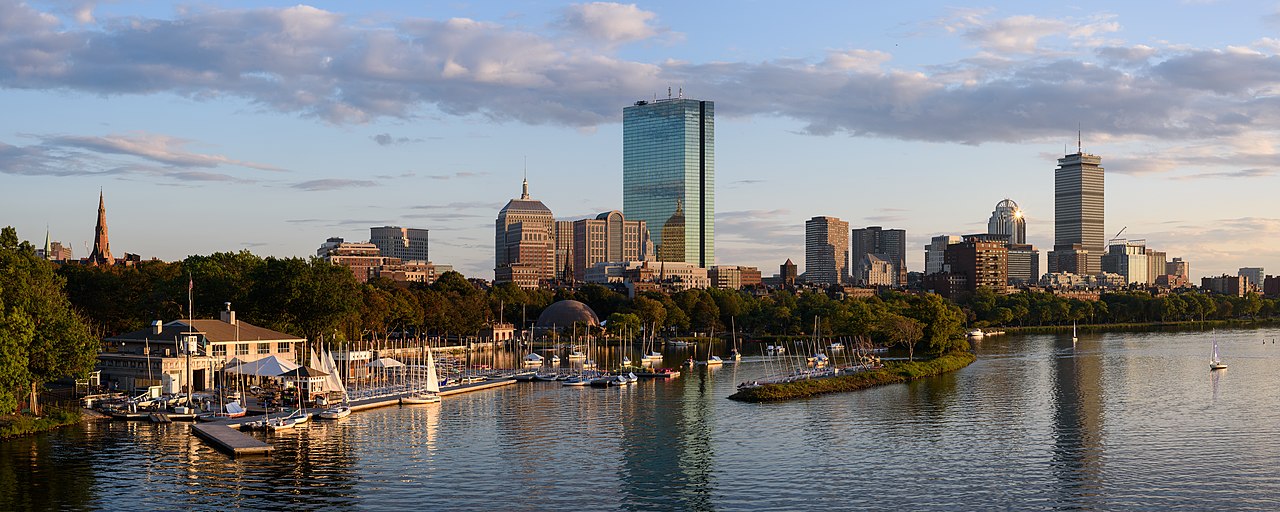
Boston's relationship with its harbor is central to the city's identity, and the waterfront has become much more accessible to the public over the past few decades. The HarborWalk is a network of public pathways that runs along much of the waterfront from East Boston through downtown to the South Boston Seaport — sections vary in character from quiet residential edges to active commercial piers, but it's largely flat and easy to navigate.
Long Wharf extends into the harbor near Faneuil Hall and serves as a departure point for ferry services to Charlestown, the Boston Harbor Islands, and points south. The Boston Harbor Islands National Recreation Area encompasses a collection of islands accessible by seasonal ferry from downtown, offering beaches, hiking trails, camping (check the NPS site for permits), and clear views back toward the city skyline.
The Seaport District, sometimes called the Innovation District, has grown significantly in recent years and now hosts restaurants, galleries, and public green spaces alongside the ICA and the Boston Children's Museum. It's an easy walk from South Station if you're arriving by commuter rail or Amtrak.
Neighborhoods Worth Wandering
Boston's neighborhoods each have a distinct character that becomes apparent simply by walking through them.
Beacon Hill is the most photographed neighborhood in the city — its narrow brick streets, gas-lit lanterns, and Federal-style rowhouses give it an atmosphere unlike any other part of Boston. Charles Street at the base of the hill has independent shops and cafes worth browsing.
The North End is Boston's oldest residential neighborhood and has a long history as an Italian-American community. It borders the waterfront, sits at the northern end of the Freedom Trail, and is dense with pastry shops and trattorias. It can get crowded on weekends during warmer months, but the narrow streets and the proximity to Copp's Hill Burying Ground and the Paul Revere House make it worth the foot traffic.
Back Bay is laid out on a grid — unusual for Boston — and Newbury Street offers eight blocks of retail, galleries, and cafes running roughly from the Public Garden to Massachusetts Avenue. The stretch is popular with walkers and is a reasonable place to spend an afternoon without a specific agenda.
The South End is known for its Victorian brownstone blocks, concentration of galleries, and what many consider the most varied restaurant scene in Boston. It's walkable from Back Bay and connects to the South Bay area and Columbus Avenue.
Jamaica Plain offers a more residential character with access to Jamaica Pond, a kettle pond within the Emerald Necklace, and the southern sections of the Arnold Arboretum. It's less trafficked by tourists and worth a visit if you want a sense of everyday neighborhood life in Boston.
Getting Around Boston
Boston's subway system — the MBTA, locally called the T — is the oldest rapid transit system in the United States and provides connections between most of the areas described above. Contactless tap-to-pay is accepted at fare gates across the system, which makes it straightforward for visitors to ride without purchasing a separate card. Buses fill in gaps the subway doesn't reach. Check the MBTA website for current service information, as schedules and routes do change.
The city's bike-share program provides another option for shorter distances, particularly along the waterfront and between neighborhoods. Walking remains the most practical way to see downtown, the North End, Beacon Hill, and Back Bay — distances between attractions in these areas are short.
Planning Your Visit
Boston is a year-round destination, though the experience varies considerably by season. For a breakdown of seasonal trade-offs and timing considerations, the Best Time to Visit Boston page covers this in detail. Common questions about logistics, neighborhoods, and planning are addressed in the Boston FAQ.
For dining, Boston has more than 3,100 mapped restaurants and cafes across the city — the Where to Eat in Boston page offers a broader overview by neighborhood and cuisine type. The Boston Travel Guide serves as a central hub if you're still in the early stages of planning and want to see everything in one place.
As with any major American city, ordinary urban awareness applies — keep an eye on your belongings in crowded areas like Faneuil Hall and the waterfront. The waterfront and downtown core are well-trafficked during daylight hours and into the evening.
Boston rewards visitors who slow down. The city is dense with points of interest, but many of the most satisfying experiences — a walk through Beacon Hill at dusk, a stretch of the HarborWalk between the Seaport and the North End, an afternoon in the Arboretum — don't require tickets or schedules. Start with what interests you most and build from there.