Top Landmarks in Albuquerque

Albuquerque sits at the intersection of deep Indigenous history, centuries of Spanish colonial settlement, and the wide-open landscapes of the middle Rio Grande valley. With roughly 562,000 residents, it is New Mexico's largest city—and one where the landmarks aren't clustered in a single tidy district but spread across mesas, riverbanks, and historic neighborhoods. Understanding how those sites relate to each other geographically makes a big difference in how much ground you can cover. This guide walks through the landmarks worth putting on your list, explains what makes each one distinctive, and shows how to connect them into a sensible route. For a day-by-day plan, see the Albuquerque 1-Day Itinerary or the Albuquerque 3-Day Itinerary.
Old Town Albuquerque
The historic core of the city, Old Town Albuquerque is the natural starting point. Founded in 1706, the original town plaza is still intact and walkable, lined with low adobe buildings, galleries, and small shops. The layout follows the traditional Spanish colonial grid, and the scale stays human—you can walk from one end of Old Town to the other in minutes.
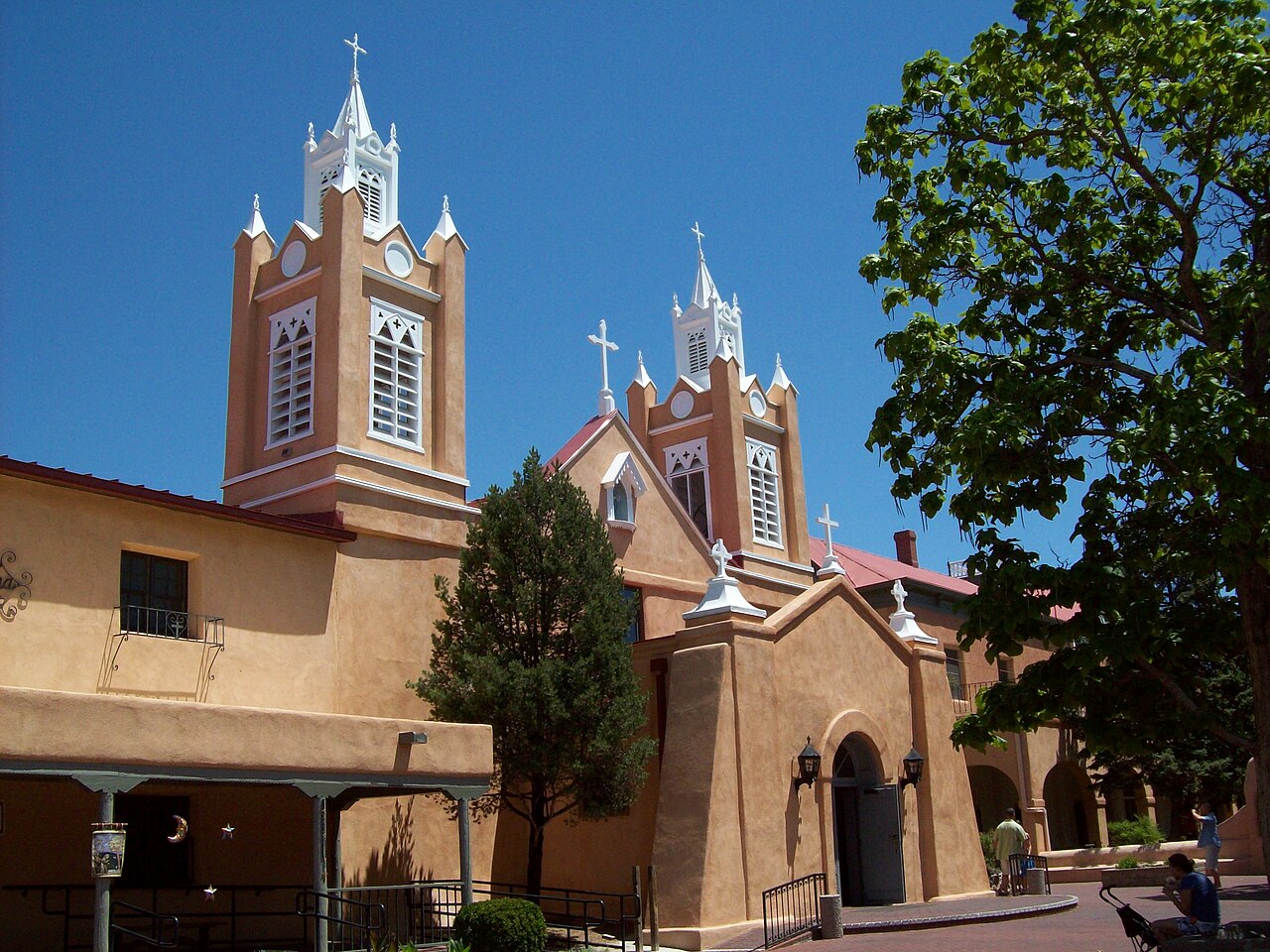
At the north end of the plaza stands San Felipe de Neri Church, one of the oldest continuously active Catholic parishes in the United States. The current structure dates to 1793, though the parish itself predates the building. The thick adobe walls and simple interior are a contrast to more ornate colonial churches elsewhere in the Southwest, and that plainness is part of what makes it worth seeing. Check the parish's official website for visiting hours before you go, as the church remains an active place of worship.
Two museums sit within easy walking distance of the plaza. The Albuquerque Museum covers the city's art, history, and culture from pre-Columbian times through the twentieth century. A few blocks away, the New Mexico Museum of Natural History and Science is particularly well-regarded for its dinosaur exhibits and its focus on the geology of the Colorado Plateau and Rio Grande rift. Confirm current hours and admission on each museum's official site, since schedules can vary by season.
Petroglyph National Monument
On the West Mesa, about a fifteen-minute drive from Old Town, Petroglyph National Monument protects one of the largest collections of rock carvings in North America. Ancestral Pueblo peoples and early Spanish settlers carved an estimated 24,000 images into the dark basalt boulders along the base of a volcanic escarpment. The monument is managed jointly by the National Park Service and the City of Albuquerque. Several short trail systems wind through the monument, ranging from very easy to moderately steep. The visitor center can orient you to the different trailheads and conditions—check the NPS website for current information before visiting.
Sandia Peak Tramway
Rising dramatically on the eastern edge of Albuquerque, the Sandia Mountains are visible from almost everywhere in the city. The Sandia Peak Aerial Tramway climbs roughly 4,000 vertical feet from the base station near the city's Northeast Heights neighborhood to the 10,378-foot summit of Sandia Peak. The ride is one of the longest aerial tramways in the United States, and the views across the Rio Grande valley are considerable. The summit sits inside Cibola National Forest, where temperatures can be significantly cooler than at the base even in summer. Check the tramway's official website for current operating status and ticketing, as weather closures are possible.
Indian Pueblo Cultural Center
Located near the University of New Mexico, the Indian Pueblo Cultural Center is operated by the 19 Pueblos of New Mexico and tells the story of Pueblo peoples from their perspective. The museum includes permanent and rotating exhibits covering art, history, and contemporary life, along with a courtyard where cultural demonstrations sometimes take place. This is one of the more substantive cultural institutions in the Southwest and stands apart from the many trading-post-style shops around Old Town. Visit the center's official site for current programming and hours.
National Hispanic Cultural Center
On the south side of downtown, near the Barelas neighborhood and the Rio Grande bosque, the National Hispanic Cultural Center is a sprawling complex dedicated to the history, art, and literature of Hispanic cultures. The Roy E. Disney Center for Performing Arts anchors the campus, and the visual arts museum holds an extensive permanent collection. The center is large enough that it warrants its own dedicated visit rather than a quick stop. Check the official site for exhibit schedules and performance listings.
Rio Grande Nature Center State Park
Running along Albuquerque's western edge, the Rio Grande is a defining geographic feature of the city and the broader region. The Rio Grande Nature Center State Park, just north of Old Town in the Bosque—the ribbon of cottonwood forest that follows the river—offers trails through one of the more unusual urban nature preserves in the Mountain West. The cottonwoods turn yellow in late October, drawing visitors specifically for that display. The park sits under a major migratory flyway, making it a well-known spot for birdwatching year-round. Confirm access hours through the New Mexico State Parks website.
National Museum of Nuclear Science & History
Southeast of downtown, the National Museum of Nuclear Science & History is the country's only congressionally chartered museum dedicated to the nuclear age. Its outdoor park includes aircraft, missiles, and nuclear reactors, while the indoor exhibits cover the Manhattan Project, the Cold War, and the physics and policy of nuclear technology. Albuquerque's proximity to Los Alamos and Kirtland Air Force Base gives the museum's subject matter particular local resonance. Check the museum's official site for hours and admission details.
How the Landmarks Cluster
Albuquerque's landmarks fall into a few loose geographic bands, which helps with planning:
- Old Town cluster: Old Town plaza, San Felipe de Neri Church, Albuquerque Museum, and the New Mexico Museum of Natural History and Science are all within a short walk of each other. The Indian Pueblo Cultural Center is about a mile east of Old Town and is an easy drive or a reasonable walk.
- West Mesa: Petroglyph National Monument is on the far west side; pair it with an early morning start before heat builds in summer.
- River corridor: The Rio Grande Nature Center and the National Hispanic Cultural Center are both near the bosque and can be combined in an afternoon, particularly for those interested in a walk along the river.
- East side: Sandia Peak Tramway is northeast of downtown; plan it as its own half-day given travel time and the ride itself.
- Southeast: The National Museum of Nuclear Science & History is a standalone destination south of the airport.
The Albuquerque 3-Day Itinerary organizes these clusters into manageable days. For a shorter trip, the Albuquerque 1-Day Itinerary focuses on Old Town and the West Mesa as the most walkable combination.
Getting Around
Most of the landmarks above are not walkable from each other—Albuquerque is a spread-out, car-oriented city, and having a vehicle makes a significant difference. The Albuquerque Rapid Transit (ART) bus system runs along Central Avenue (Historic Route 66) and connects some areas, but the Sandia Peak Tramway, Petroglyph National Monument, and the Rio Grande Nature Center are better reached by car or rideshare. Check the city's official transit site for current routes and schedules.
Standard urban-awareness practices apply throughout the city: keep an eye on your surroundings and secure valuables out of sight in a parked vehicle.
Eating Near the Landmarks
Albuquerque has well over a thousand restaurants and cafes across the city, with a notable concentration of New Mexican cuisine around Old Town, Nob Hill, and the downtown area. For an overview of the dining scene, see Where to Eat in Albuquerque.
For a full orientation to what Albuquerque offers visitors, start with the Albuquerque Travel Guide: Things to Do, Landmarks, Food, and Itineraries. The Best Things To Do in Albuquerque and Best Time to Visit Albuquerque pages round out the planning picture.